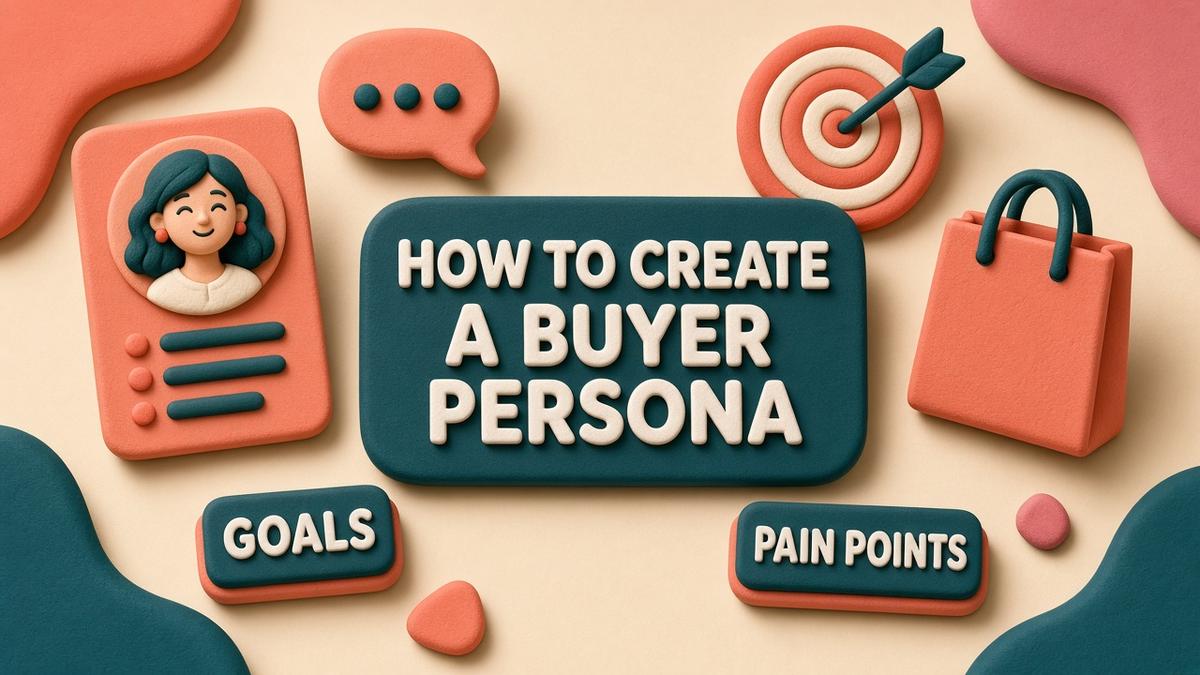
A buyer persona is a short, research-based profile of your ideal customer: who they are, what they are trying to achieve, what gets in their way and how they decide to buy. Learning how to create a buyer persona is one of the fastest ways to make your marketing sharper, because every headline, offer and email starts speaking to one real person instead of “everyone”. This guide covers what to include, where to find real data, seven practical steps, two worked buyer persona examples and a template you can copy.
✔ Key takeaways
⏱ About 8 min read · the short version is right here
- A buyer persona is a semi-fictional profile built from real customer research, not guesses.
- Focus on goals, pain points, objections and buying triggers; demographics alone rarely change your marketing.
- Interview 5 to 10 real customers; it beats any survey or brainstorm.
- Most small businesses need 1 to 3 personas, not ten.
- A persona is only useful if it changes something: your messaging, offers, channels or email segments.
📋 In this guide
- What is a buyer persona?
- Why buyer personas matter for small businesses
- What to include in a buyer persona
- Where to find real persona data
- How to create a buyer persona in 7 steps
- Buyer persona example: B2B and B2C
- How to use personas in marketing and sales
- Buyer persona mistakes to avoid
- Buyer persona template
- FAQ
What is a buyer persona?
A buyer persona (also called a customer persona or marketing persona) is a one-page description of a typical customer in a specific segment. It gives that customer a name, a role and a story, so your team can ask “would Freelance Fiona care about this?” instead of debating opinions.
The key word is research-based. A good persona is built from conversations, reviews, sales data and analytics. It is closely linked to your value proposition: the persona describes the customer’s problem, the value proposition describes how you solve it.
📌 Persona vs target market
A target market is a broad group (“UK small business owners”). A buyer persona is one specific person inside it (“Mark, 41, owns a two-van plumbing company in Leeds and books jobs from his phone at night”).
Why buyer personas matter for small businesses
- Clearer messaging. You write in your customer’s words, which lifts conversion on landing pages and ads.
- Smarter spending. You advertise where your persona actually spends time, not everywhere.
- Better products and offers. Pain points and objections show what to build, bundle or guarantee.
- Aligned sales and marketing. Everyone qualifies leads against the same profile.
- Personalised email. Personas become the basis for email segmentation and targeted sequences.
What to include in a buyer persona
| Section | What to capture | Why it matters |
|---|---|---|
| Name, role and snapshot | A memorable name, job title or life stage, business size or household | Makes the persona easy to refer to |
| Goals | What they want to achieve in the next 6 to 12 months | Your offer must connect to a goal |
| Pain points | Problems, frustrations and fears in their own words | Fuel for headlines and copy |
| Buying triggers | The event that makes them start looking (a new hire, a bad month, a deadline) | Tells you when to reach them |
| Objections | Price, time, trust, switching cost, “we tried this before” | What your FAQ, guarantees and proof must answer |
| Decision process | Who decides, who influences, how long it takes, what they compare | Shapes your sales process |
| Channels | Where they search, scroll, read and ask for advice | Where to spend marketing time and budget |
| Quote | One real sentence a customer said | Keeps the persona human and honest |
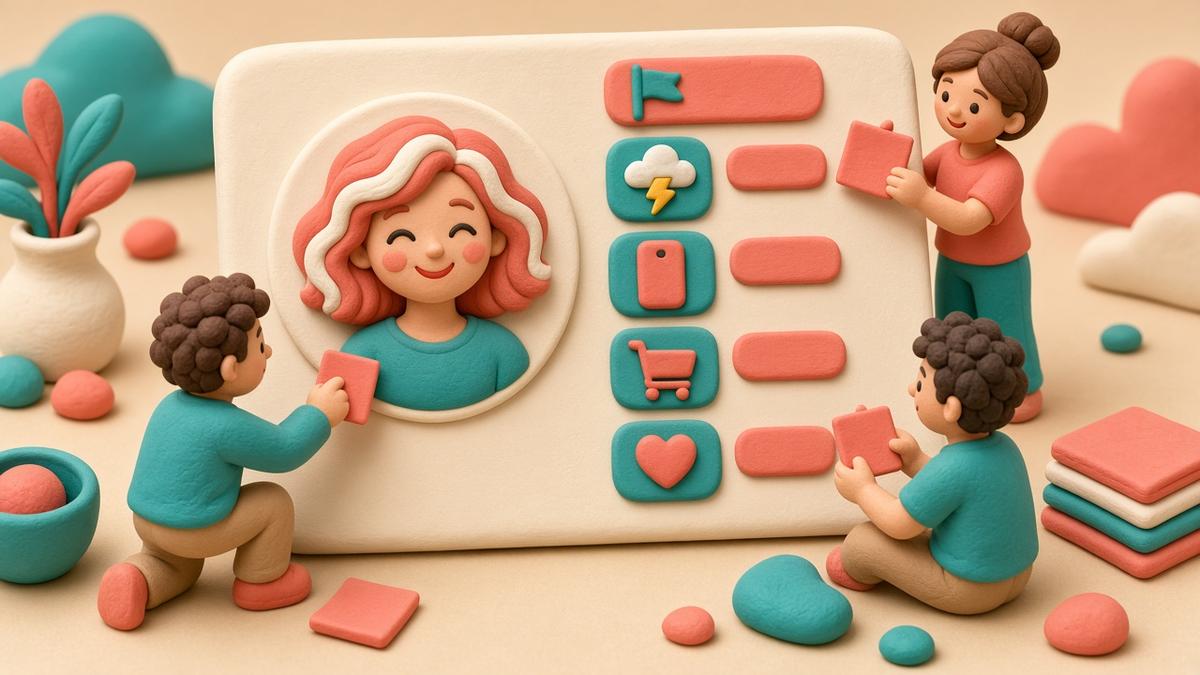
A useful buyer persona fits on one page: goals, pain points, channels and buying triggers.
💡 Skip what doesn’t change decisions
Age, hobbies and favourite colour only belong in a persona if they change how you market. For most B2B businesses, role, company size and trigger events matter far more.
Where to find real persona data
| Source | What you learn | Effort |
|---|---|---|
| Customer interviews (20 to 30 minutes) | Goals, triggers, objections, exact wording | Medium, highest value |
| Sales call notes and CRM data | Common questions, deal size, sales cycle length | Low |
| Reviews (yours and competitors’) | What people love and hate, in their own words | Low |
| Short surveys | How common a pain point is across your list | Low to medium |
| Website and email analytics | Which content and offers attract which visitors | Low |
| Support tickets and live chat | Confusion points and missing features | Low |
| Forums, Reddit, Facebook groups | Unfiltered language and problems | Medium |
Combine at least two sources. Interviews give depth, analytics and surveys confirm that what you heard is common, not a one-off. If you sell B2B, your competitor analysis and case studies are also rich sources.
⚠️ Respect privacy
If you record interviews or store survey answers, get consent and keep the data secure. In the UK and EU, GDPR applies to persona research data that identifies a person, so anonymise notes before sharing them with your team.

Short customer interviews are the richest source of buyer persona insight.
How to create a buyer persona in 7 steps
Pick the segment
Start with your best existing customers: highest value, easiest to serve, most likely to refer. Write down who they have in common.
Gather existing data
Export CRM fields, sales notes, reviews and analytics. Note patterns in role, company size, budget and where leads came from.
Interview 5 to 10 customers
Ask what was happening when they started looking, what else they tried, what nearly stopped them buying and how they would describe the result to a friend. Record their exact words.
Find the patterns
Group answers into goals, pain points, triggers, objections and channels. When three or more people say similar things, it belongs in the persona.
Write the one-page persona
Give it a name, a snapshot, a real quote and the sections from the table above. Keep it short enough to read in two minutes.
Share and use it
Add it to your marketing plan, sales playbook and onboarding docs. Ask the team to reference the persona by name in planning.
Review twice a year
Markets shift. Re-check personas every six months against new interviews and sales data, and retire any that no longer match real buyers.
Buyer persona example: B2B and B2C
Two short buyer persona examples. The businesses and people are fictional, but the structure is what you should aim for.
| Section | B2B: “Agency Owner Alex” | B2C: “Busy Parent Priya” |
|---|---|---|
| Snapshot | Runs a 6-person marketing agency in Austin; 25 retainer clients | Works full time in Dublin; two children under 10; shops online in the evening |
| Goals | Win 5 more retainers this year without hiring a salesperson | Healthy dinners on the table in under 30 minutes, four nights a week |
| Pain points | Leads go cold, follow-ups slip, proposals take hours | Recipe apps assume time and ingredients she doesn’t have |
| Buying trigger | Losing a big client or a slow quarter | A new school term or a hectic month at work |
| Objections | “Another tool my team won’t use” | “Meal kits are too expensive” |
| Channels | LinkedIn, industry podcasts, peer Slack groups | Instagram, parenting newsletters, friends’ recommendations |
| Message that works | “Never lose a warm lead again; set up in an afternoon” | “Five 25-minute family dinners, one shopping list” |
How to use personas in marketing and sales
- Content: plan blog posts and guides around each persona’s top questions and pain points.
- Lead magnets: build a lead magnet that solves one urgent persona problem.
- Email: tag subscribers by persona at sign-up (one question is enough) and send each group different sequences. Tools such as Kit let you do this with tags and simple automations.
- Sales: qualify leads by persona fit and prepare answers to each persona’s main objections in your sales pipeline.
- Ads and channels: spend where the persona spends time and test copy that uses their exact words.
- Product: prioritise features, bundles and guarantees that remove the biggest objections.
Buyer persona mistakes to avoid
- Making it up. A persona built in a meeting room describes what you wish was true.
- Too many personas. If you have eight, you effectively have none. Start with one primary persona.
- Only demographics. “Female, 35 to 44, urban” doesn’t tell you what to write.
- Set and forget. Personas go stale as markets and products change.
- Ignoring negative personas. Also describe who is not a fit, so you stop wasting time on poor-fit leads.
Buyer persona template
| Field | Fill in |
|---|---|
| Persona name and photo or avatar | |
| Role, business size or life stage | |
| Top 3 goals | |
| Top 3 pain points (their words) | |
| Buying trigger | |
| Main objections | |
| Who else influences the decision | |
| Channels and trusted sources | |
| Real customer quote | |
| Message that resonates | |
| Last reviewed (date) |
Copy the template into a doc or spreadsheet and fill one per persona. Keep the finished versions in the same place as your marketing plan so they are used, not forgotten.
Frequently Asked Questions
What is a buyer persona in simple terms?
A buyer persona is a one-page profile of your ideal customer, based on real research, describing their goals, problems, buying triggers, objections and where they look for information.
How many buyer personas should a small business have?
Most small businesses do well with one to three. Start with one primary persona for your best customers and add others only when a segment clearly behaves differently.
How many interviews do I need to create a buyer persona?
Five to ten interviews per persona is usually enough to see clear patterns. Stop when you keep hearing the same answers.
What is the difference between a buyer persona and an ideal customer profile?
An ideal customer profile (ICP) describes the ideal company or account, such as industry and size. A buyer persona describes the individual people involved in buying, such as their goals and objections.
Can I create a buyer persona without customers?
Yes, as a starting hypothesis. Use competitor reviews, forums, surveys and interviews with people in your target market, then update the persona once you have real customers.
How often should buyer personas be updated?
Review them every six months, and whenever you launch a new product, enter a new market or notice your best customers changing.
You don’t need an agency or a big budget to create a buyer persona. Talk to a handful of your best customers this week, write down their exact words, and turn the patterns into a single page your whole team can use. Then let it shape your next email, landing page and offer.
Affiliate disclosure: some links in this post are affiliate links, so I may earn a commission at no extra cost to you. I only recommend tools I’d use myself.