Disclosure: This post contains affiliate links. If you buy through them, I may earn a commission at no extra cost to you.
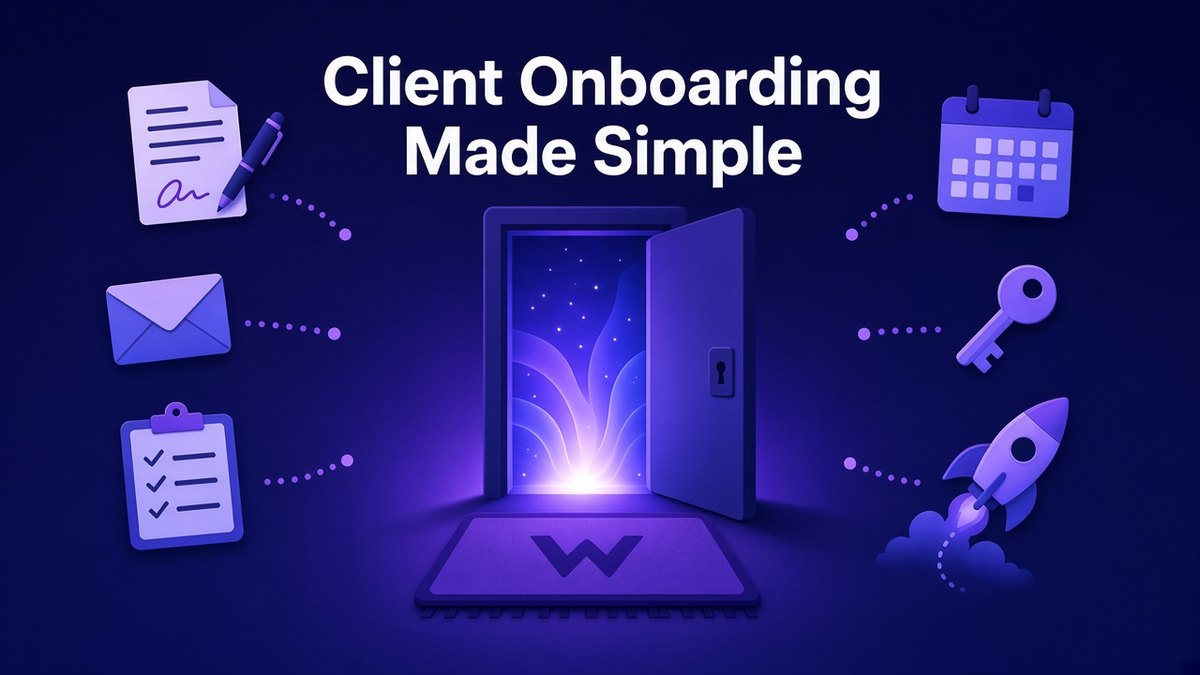
A clear client onboarding process is one of the simplest ways to grow a service business. The first few weeks with a new client shape everything that follows: how much they trust you, how smoothly the work runs and whether they stay for the next project. Yet many freelancers and small agencies still onboard clients with a few scattered emails and a hope for the best.
In this guide, I walk you through a practical client onboarding process in eight steps. You will also get a ready-to-use checklist, a welcome email template, GDPR notes for UK and EU clients and simple ways to automate the routine parts, so every new client gets the same great start.
✔ Key takeaways
- A client onboarding process is the set of steps between a signed deal and the start of real work.
- Good onboarding sets expectations, collects everything you need and builds trust early, which reduces problems later.
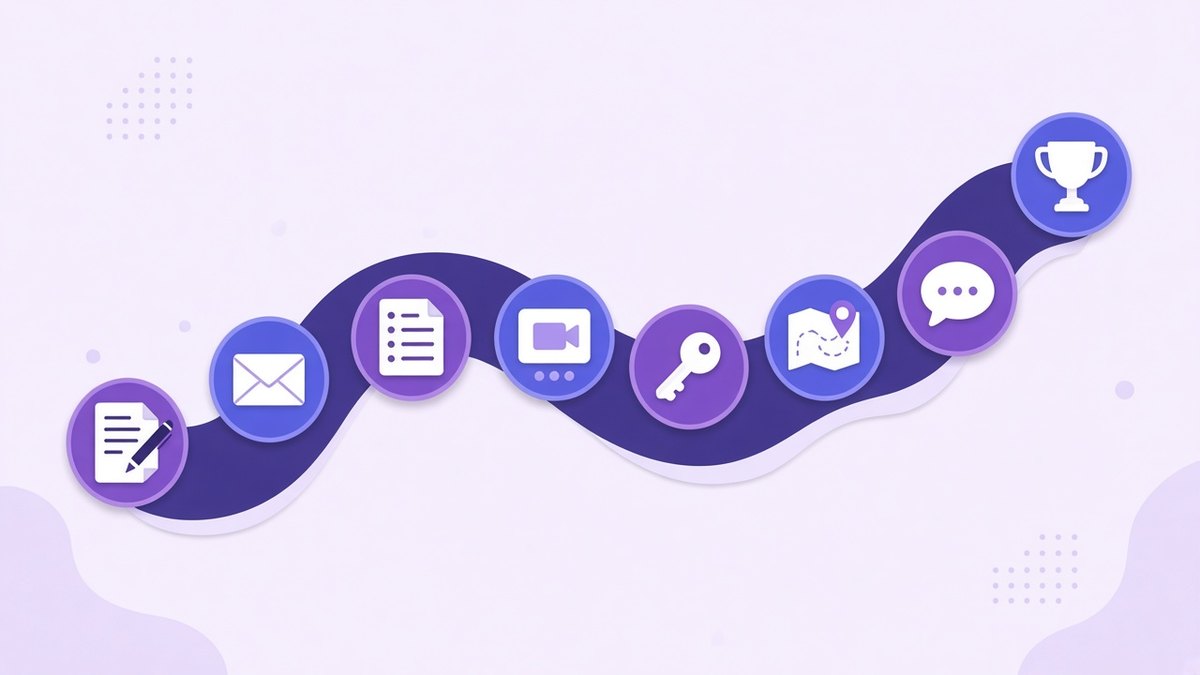
- The core steps are: contract and deposit, welcome email, questionnaire, kick-off call, access, plan and first quick win.
- In the UK and EU, collect only the data you need and agree on a data processing agreement where it applies.
- Automate reminders, forms and welcome emails, but keep the kick-off call personal.
📋 In this guide
- What is a client onboarding process?
- Why client onboarding matters
- The client onboarding process in 8 steps
- Client onboarding checklist
- A simple welcome email template
- GDPR and data protection during onboarding
- How to automate client onboarding
- Common client onboarding mistakes
- Frequently Asked Questions
- Final thoughts
What is a client onboarding process?
A client onboarding process covers everything that happens after a client says yes and before the main work begins. It usually includes the contract, payment, a welcome message, a questionnaire, a kick-off call and access to tools or files.
Think of it as the client’s first real experience of working with you. A sales call shows what you promise. Onboarding shows how you actually work. Therefore, a smooth start tells the client they made the right choice.
Why client onboarding matters
Most client problems start in the first weeks. Missing information, unclear deadlines and vague scope all lead to frustration later. In my guide to difficult clients, many of the worst patterns could have been prevented by a better start.
A strong onboarding process brings three clear benefits:
- Fewer misunderstandings: scope, timelines and communication rules are agreed in writing.
- Faster results: you get the brief, files and logins on day one, not week three.
- Longer relationships: clients who feel looked after are more likely to renew and refer you.
📌 Onboarding is part of retention
Keeping a client starts on day one, not at renewal time. For more ideas, see my guide to customer retention strategies.
The client onboarding process in 8 steps
Here is a client onboarding process that works for freelancers, consultants and small agencies. Adjust the details to your service, but keep the order.
Send the contract and invoice the deposit
Use a clear contract or statement of work with scope, timeline, revision rounds and payment terms. Start only after it is signed and the deposit is paid.
Send a warm welcome email
Thank the client, explain what happens next and share key dates. Include your working hours and the best way to reach you.
Collect information with a questionnaire
Ask about goals, audience, competitors, brand assets and past results. A form is faster for the client than a long email thread.
Hold a kick-off call
Spend 30 to 60 minutes confirming goals, success measures, decision-makers and the first milestones. Record the key decisions in a short summary afterwards.
Set up access and tools
Request logins, shared folders and tool access in one list. Use a password manager or the platform’s own user invites rather than plain email.
Share the project plan
Send a simple plan with milestones, owners and dates. Clients relax when they can see exactly what happens each week.
Agree on communication rules
Decide on one channel, a reply time and a regular update, such as a short report every Friday.
Deliver a quick first win
Aim to deliver something useful within the first two weeks, such as an audit or a first draft. Early progress builds trust fast.
The kick-off call is the heart of the whole client onboarding process, so plan it well. Here is a simple agenda that fits into 45 minutes:
- Introductions (5 minutes): who is on the call and who makes final decisions.
- Goals (10 minutes): what success looks like in three and twelve months.
- Scope check (10 minutes): confirm what is included and what is not.
- Timeline and milestones (10 minutes): key dates and any fixed deadlines.
- Next steps (10 minutes): who does what this week, and when you will next update them.
Afterwards, send a short written summary the same day. It gives both sides a clear record and prevents arguments later.
💡 Write it down once
Turn these steps into a written standard operating procedure. My guide on how to write standard operating procedures shows how to document a process so anyone on your team can follow it.
Client onboarding checklist
Copy this checklist into your project tool and tick it off for every new client.
| Stage | Task | Done when |
|---|---|---|
| Before start | Contract signed | Signed copy saved in the client folder |
| Before start | Deposit paid | Payment received and recorded |
| Day 1 | Welcome email sent | Client has next steps and key dates |
| Days 1-3 | Questionnaire completed | All answers and assets received |
| Week 1 | Kick-off call held | Summary of decisions sent |
| Week 1 | Access granted | All logins and folders working |
| Week 1 | Project plan shared | Client has confirmed the milestones |
| Weeks 1-2 | First quick win delivered | Client has seen early results |
Keep your records tidy too. A simple system for contracts, invoices and notes makes tax time easier, as I explain in my guide to business record keeping.
A simple welcome email template
Your welcome email does not need to be long. However, it should answer the questions every new client has: what happens next, when and how to reach you. Here is a simple template you can adapt:
Subject: Welcome aboard, here is what happens next
Hi [Name],
Thank you for choosing [Your business]. I am excited to start on [project].
Here are the next steps:
- Please complete this short questionnaire by [date]: [link]
- Book your kick-off call here: [link]
- Share access to [tools] using the list attached.
I work [days and hours, time zone] and reply within one business day. You will get a short progress update every Friday.
Speak soon,
[Your name]
Send it within a few hours of the deposit arriving. A quick, friendly reply shows the client that you are organised and ready.
GDPR and data protection during onboarding
Onboarding usually involves personal data: names, emails, phone numbers and sometimes customer lists. If you or your clients are in the UK or the EU, GDPR and UK GDPR apply.
In practice, collect only the data you need for the project. Store it securely, limit who can access it and delete it when the project ends, unless you must keep it for legal or tax reasons. If you process personal data on the client’s behalf, for example by managing their email list, you will usually need a data processing agreement (DPA) between you.
⚠️ Never ask for passwords by plain email
Use user invites, shared access features or a password manager instead. It is safer, and it shows clients you take their data seriously.
How to automate client onboarding
Once your client onboarding process is written down, you can automate the repetitive parts. For example, a signed proposal can trigger the welcome email, send the questionnaire and add a reminder if it is not completed within three days.
Agencies that want the CRM, forms, booking calendar, email and SMS follow-up in one platform can do most of this in GoHighLevel. My GoHighLevel review explains its features in detail. If you are a solopreneur on a tight budget, Systeme.io lets you build onboarding email sequences and even a simple client area with its course tool, starting on a free plan.
Not sure which platform fits? Compare options in my guide to the best CRM for small agencies, or browse every comparison in my Reviews & Tools section.

| Task | Automate it? | Why |
|---|---|---|
| Welcome email | Yes | Same message every time, sent instantly |
| Questionnaire reminders | Yes | Saves you chasing clients by hand |
| Kick-off call booking | Yes | A booking link avoids long email threads |
| Kick-off call itself | No | This is where trust is built |
| Project plan | Partly | Use a template, then personalise it |
Automate your client onboarding
Use one platform for your CRM, forms, booking calendar and follow-up emails, so every new client gets the same smooth start.
Affiliate link. I may earn a commission at no extra cost to you.
Common client onboarding mistakes
Even good businesses make these onboarding mistakes. Watch out for them:
- Starting work before the contract is signed and the deposit is paid.
- Sending ten separate emails instead of one clear welcome pack.
- Skipping the kick-off call to save time, then fixing misunderstandings for weeks.
- Asking for information the client already gave during sales.
- Promising instant replies, then missing them.
If you delegate onboarding to a team member or a virtual assistant, give them the checklist and a clear handover. My guide on how to delegate tasks effectively explains how to do that without losing quality.
Frequently Asked Questions
What is a client onboarding process?
It is the set of steps between a signed deal and the start of real work, usually the contract, deposit, welcome email, questionnaire, kick-off call, access setup and project plan.
How long should client onboarding take?
For most freelance and agency projects, one to two weeks is enough. Aim to deliver a small first win within the first two weeks.
What should a client onboarding questionnaire include?
Ask about goals, target audience, competitors, brand assets, past results, decision-makers and any deadlines. Keep it short enough to finish in about 15 minutes.
Can I automate client onboarding?
Yes. Welcome emails, questionnaire reminders and call booking are easy to automate with a CRM or marketing platform. Keep the kick-off call personal.
Do I need a data processing agreement with clients?
If you handle personal data on a client’s behalf under GDPR or UK GDPR, such as managing their email list, you usually need a data processing agreement. Check official guidance for your situation.
Final thoughts
A good client onboarding process is not complicated. It is a short, repeatable routine: contract and deposit, welcome email, questionnaire, kick-off call, access, plan and a quick first win. Write it down, automate the routine parts and keep the human moments personal.
Start with your very next client. Use the checklist, send the welcome email template and track how smoothly the first month goes. You will likely see fewer problems, happier clients and more repeat work.
Affiliate disclosure: Some links in this post are affiliate links. If you buy through them, I may earn a commission at no extra cost to you. I only recommend tools and books I believe are genuinely useful.