
Learning how to write a business plan does not mean producing a 50-page document full of jargon. For most small businesses and first-time entrepreneurs, a short, clear plan is far more useful. It forces you to think through your idea, spot weak points before they cost money, and explain your business to partners, lenders or investors in a way they can quickly understand. This guide shows you how to write a simple business plan step by step, using plain language and a structure you can finish in a few focused sessions.
Why You Need a Business Plan, Even a Short One
A business plan is a thinking tool first and a document second. Writing things down turns vague hopes into specific decisions. A simple plan helps you:
- Test your idea: You will quickly see whether you know who your customers are and why they would buy from you.
- Manage money: Estimating costs and sales shows how much cash you need and when you might break even.
- Stay focused: When new opportunities appear, your plan reminds you what you set out to do.
- Raise funds: Banks and investors usually want to see a plan before they lend or invest.
Think of your plan as a living document. You will update it as you learn, and that is exactly how it should work.
How to Write a Business Plan in 8 Simple Sections
The structure below covers what most readers want to see. Keep each section short and honest. One or two pages per section is plenty for a simple plan.
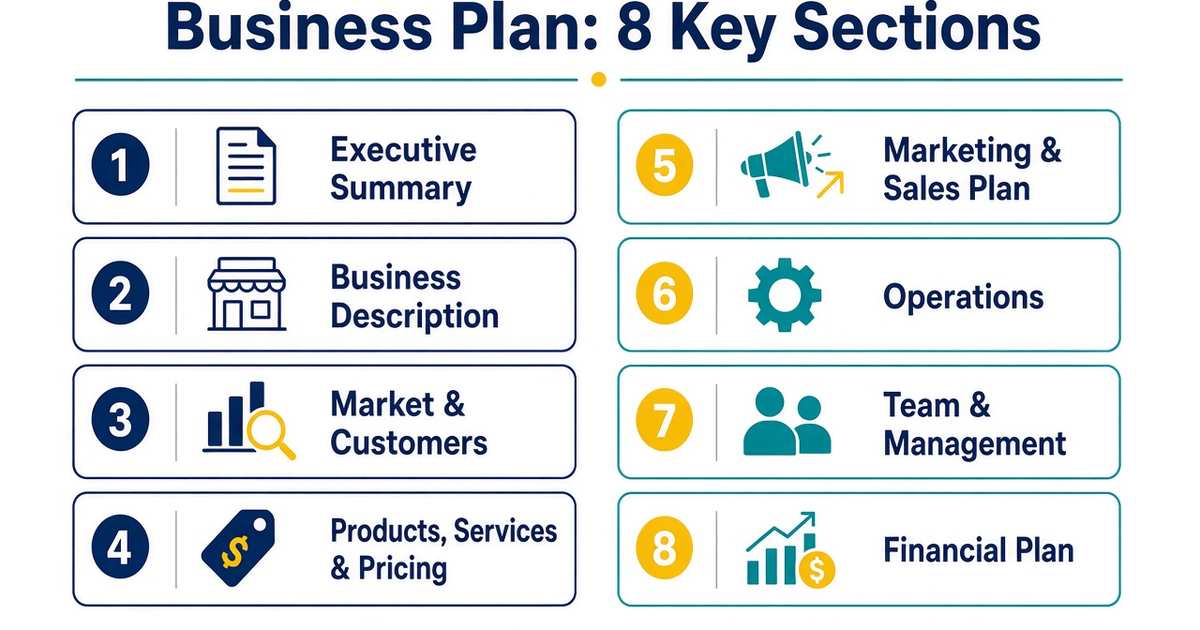
1. Executive summary
This is a short overview of the whole plan: what your business does, who it serves, how it makes money and what you need, such as funding or partners. Write it last, once you have worked through everything else, but place it first. Many readers only read this page, so make it clear and specific.
2. Business description
Explain what your business is and why it exists. Include your products or services, your location or whether you operate online, your legal structure and your goals for the next one to three years. Describe the problem you solve in the customer’s words, not yours.
3. Market and customers
Describe your ideal customer in detail: who they are, where they are, what they struggle with and how they buy today. Then look at your competitors. Who else solves this problem, what do they charge, and where are they weak? You do not need expensive research. Talking to potential customers, reading reviews of competitors and studying online search interest can tell you a lot.
4. Products, services and pricing
List what you will sell, what makes it different and how you will price it. Be clear about your costs per unit or per hour so you know your margin on every sale. If pricing feels like guesswork, our guide on how to price your product or service walks through simple methods.
5. Marketing and sales plan
Explain how customers will find you and why they will choose you. Which channels will you use, such as social media, search, email, partnerships, local events or direct sales? What will you spend, and what results do you expect? Keep it realistic. For a deeper look at this section, read marketing strategy and planning: the road map.
6. Operations
Describe how the business will actually run day to day. Cover suppliers, equipment, premises, technology, key processes and who does what. If you plan to hire, list the roles you need and when. This section often reveals hidden costs and bottlenecks.
7. Team and management
Introduce the people behind the business and the skills they bring. Be honest about gaps and how you plan to fill them, for example through advisors, freelancers or future hires. Investors back people as much as ideas.
8. Financial plan
This is where many first plans fall short, so take your time. Include:
- Start-up costs: Everything you need to spend before you open.
- Sales forecast: A month-by-month estimate for the first year, based on clear assumptions.
- Running costs: Rent, salaries, software, marketing and other regular expenses.
- Cash flow forecast: When money will come in and go out, so you know if you will run short.
- Break-even point: How much you need to sell to cover all your costs.
Write down your assumptions next to each number, such as “10 new customers a month from local advertising.” That makes your forecast easier to check and update. Cash is the lifeblood of a young business, so it is worth reading our tips on how to improve cash flow in your business as you build this section.
Tips for Writing a Plan People Will Actually Read
- Use plain language. If a friend outside your industry cannot understand it, simplify it.
- Be specific. “We will grow fast” means little. “We aim to reach 100 paying customers in 12 months” gives everyone a target.
- Be honest about risks. Listing the main risks and how you will handle them builds credibility.
- Keep it short. For a simple plan, 10 to 15 pages is plenty. A one-page version is also handy for quick conversations.
- Use visuals sparingly. A simple table of numbers or a basic chart can explain more than paragraphs of text.
Common Business Plan Mistakes to Avoid
- Overly optimistic forecasts: Plan for slower sales and higher costs than you hope for.
- Ignoring competitors: Saying you have no competition usually means you have not looked hard enough.
- Vague customers: “Everyone” is not a target market.
- Writing it once and forgetting it: A plan is only useful if you revisit it.
- Planning instead of testing: Do not spend months perfecting a document when you could be talking to real customers.
That last point matters. A plan is full of guesses, and the fastest way to improve it is to test those guesses in the real world. The Lean Startup by Eric Ries is a well-known book on testing business ideas quickly and cheaply, and it pairs well with a simple written plan.
Disclosure: Some links in this post are affiliate links. If you buy through them, I may earn a small commission at no extra cost to you.
Tools to Build and Launch Your Business Plan
- LivePlan – guided business plan software with templates and financial forecasts, handy if you want an investor-ready plan fast.
- Xero or QuickBooks – accounting software to turn your financial plan into real bookkeeping once you launch.
- Notion – a free workspace to draft your plan, track milestones and keep research in one place.
- Systeme.io – an all-in-one tool for landing pages, email and sales funnels, so you can test your marketing plan with a free account. Read our Systeme.io review.
- GoHighLevel – a CRM and marketing platform if your plan involves running an agency or managing many clients. See our GoHighLevel review.
Keep Your Plan Alive
Once your plan is written, put a date in your calendar to review it every three months. Compare your actual sales and costs with your forecast, note what surprised you and adjust your next steps. Over time, your plan becomes a record of what you have learned and a guide to where you are going.
Now that you know how to write a business plan, the best next step is to start. Open a blank document, write a rough version of each section in one sitting, and improve it as you go. A simple, honest plan you actually use is worth far more than a perfect one that never gets finished.
As an Amazon Associate I earn from qualifying purchases.