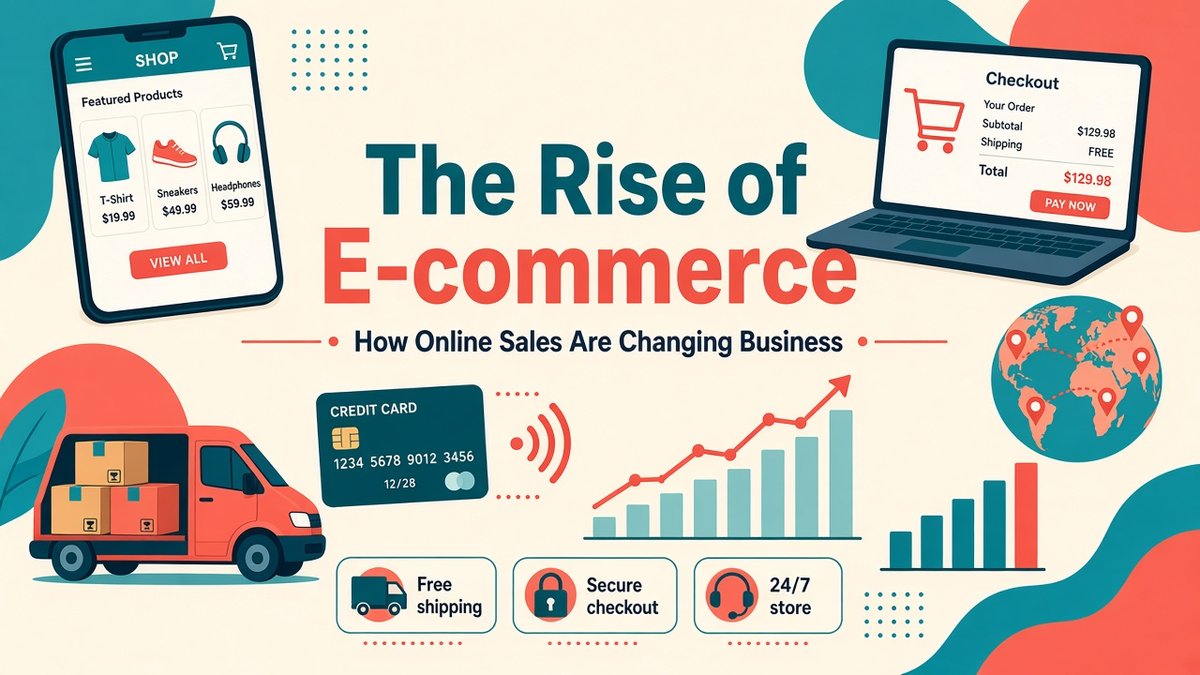
The rise of e-commerce has changed how people shop and how businesses sell, almost everywhere in the world. A customer in Berlin can order from a small brand in Texas at midnight, pay in seconds on their phone and track the parcel to their door. For business owners, this shift means a bigger market, lower running costs and new ways to grow, but also tougher competition. In this 2026 guide you will learn what is driving online sales, how e-commerce is reshaping business models, and a simple step-by-step plan to launch or grow your own online store.
✔ Key takeaways
- E-commerce keeps growing because shopping online is faster, available 24/7 and works on any phone.
- For sellers, an online store means global reach, lower overhead and automation of sales, payments and follow-up emails.
- Popular models include direct-to-consumer brands, marketplaces, subscriptions, dropshipping and digital products.
- You can launch a simple store in six steps: niche, platform, products, payments, shipping and marketing.
- The main risks are competition, trust, returns and data security, and each has a practical fix.
- In 2026, social commerce, AI personalisation and fast, flexible delivery are the trends to watch.
📋 In this guide
- What the rise of e-commerce really means
- 5 forces driving online sales
- How e-commerce is changing business
- Online store vs physical shop
- E-commerce business models to know
- How to launch an online store in 6 steps
- Challenges and how to handle them
- E-commerce trends to watch in 2026
- Frequently Asked Questions
- Final thoughts
What the rise of e-commerce really means
E-commerce simply means buying and selling goods or services over the internet. It covers online shops, marketplaces such as Amazon and Etsy, app stores, subscription boxes, online courses and even booking a haircut on your phone. What has changed over the last decade is scale. Online retail is now measured in trillions of dollars a year worldwide, and a growing share of everyday purchases, from groceries to software, happens online.
The rise of e-commerce is not only about big retailers. Millions of small businesses, solo creators and local shops now sell online, often alongside a physical location. The internet has lowered the cost of starting a business so much that a person with a laptop and a good idea can reach customers in dozens of countries.
📌 Quick definition
The rise of e-commerce is the ongoing shift of shopping and selling from physical stores to websites, apps, marketplaces and social platforms, powered by mobile devices, digital payments and fast delivery.
5 forces driving online sales
Several forces work together to push more sales online every year. Understanding them helps you decide where to focus your own business.
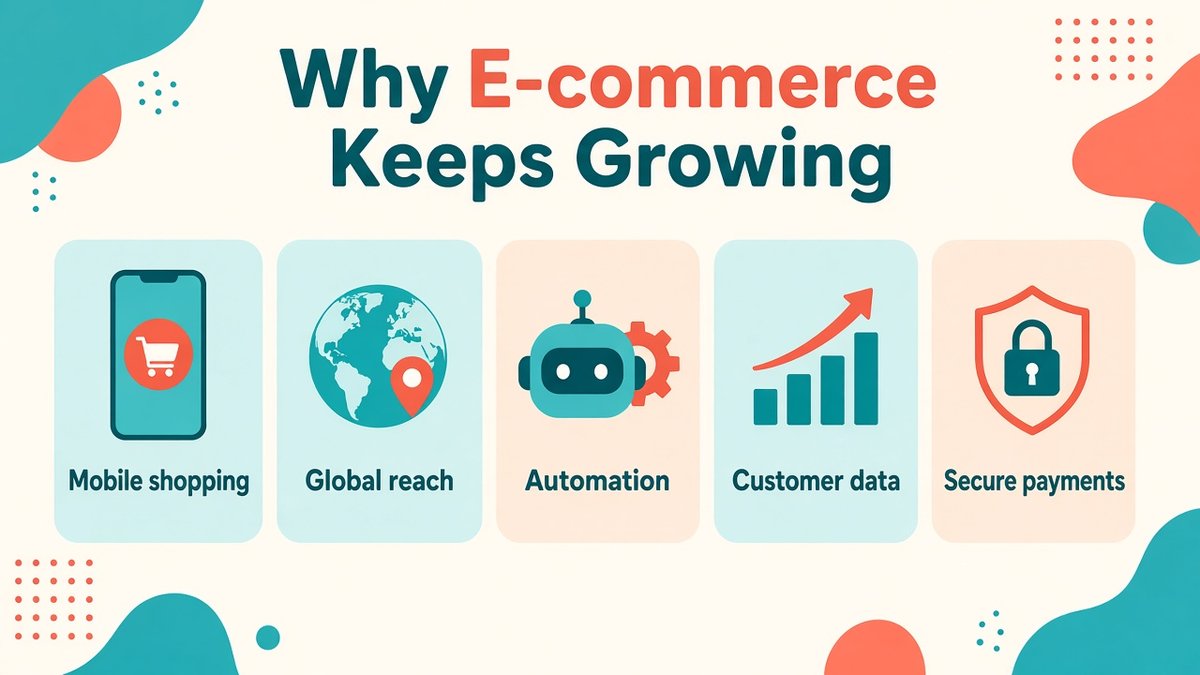
Five forces behind the rise of e-commerce: mobile shopping, global reach, automation, customer data and secure payments.
- Mobile shopping: most people now browse and buy on their phones. One-tap checkout, saved cards and digital wallets such as Apple Pay and Google Pay remove friction.
- Global reach: a website is open to the whole world. Cross-border shipping and multi-currency checkout let a small shop sell in dollars, euros and pounds.
- Automation: inventory updates, order confirmations, abandoned-cart emails and invoices can run on their own, so a tiny team can serve thousands of customers.
- Customer data: online stores see what people view, add to cart and buy. That data powers better products, offers and marketing.
- Secure payments and delivery: trusted payment processors, buyer protection and fast, trackable shipping make shoppers comfortable buying from brands they have never visited in person.
How e-commerce is changing business
For consumers, the biggest benefit is convenience. People can shop at any hour, compare prices in seconds, read reviews and get items delivered to their door. This is especially valuable for busy professionals, people in rural areas and anyone who finds in-person shopping difficult.
For businesses, e-commerce changes the economics of selling:
- Bigger market: you are no longer limited to people who walk past your shop. You can test new countries without opening a branch.
- Lower overhead: no expensive high-street rent is needed to start. Many online stores run from a home office or a small warehouse.
- Faster feedback: you can launch a product, watch the data and improve it in days, not seasons.
- Repeat revenue: email lists, subscriptions and loyalty programmes help you sell again to existing customers, which is far cheaper than finding new ones. My guide to customer retention strategies covers this in depth.
- Automated sales funnels: a visitor can find you, join your list, buy and get upsold without you being online. Learn how in how to build a sales funnel.
Online store vs physical shop
Most businesses do best with a mix of channels, but it helps to see the differences clearly:
| Factor | Online store | Physical shop |
|---|---|---|
| Opening hours | 24/7, every day | Fixed hours, staff needed |
| Reach | Local, national or global | Mostly people nearby |
| Start-up cost | Low: platform, domain, first stock | High: rent, fit-out, stock, staff |
| Customer data | Detailed: views, carts, purchases | Limited unless you run a loyalty scheme |
| Customer experience | Convenient, but no touch or try-on | Hands-on, personal service |
| Main costs as you grow | Ads, shipping, returns, software | Rent, wages, utilities |
E-commerce business models to know
The rise of e-commerce has created many ways to make money online. Here are the most common models and who they suit:
- Direct-to-consumer (D2C): you make or source your own branded products and sell them on your own website. Higher margins and full control of the customer relationship.
- Marketplaces: you sell on Amazon, Etsy, eBay or similar platforms. Huge built-in traffic, but fees are higher and the customer belongs to the marketplace.
- Subscriptions: customers pay monthly for refills, boxes, software or memberships. Predictable revenue if you keep churn low.
- Dropshipping and print on demand: a supplier stores and ships products for you. Low upfront cost, but thin margins and less control over quality and delivery times.
- Digital products: online courses, templates, e-books and memberships. No shipping and very high margins, ideal for creators and consultants.
- B2B e-commerce: businesses ordering from other businesses through online catalogues and portals, a fast-growing and often overlooked segment.
💡 Tip for beginners
If you are testing an idea, start with a digital product or a small batch of physical stock. Validate demand with a simple landing page and an email list before you invest in large inventory.
How to launch an online store in 6 steps
Ready to ride the rise of e-commerce yourself? Here is a practical plan you can follow even with a small budget.
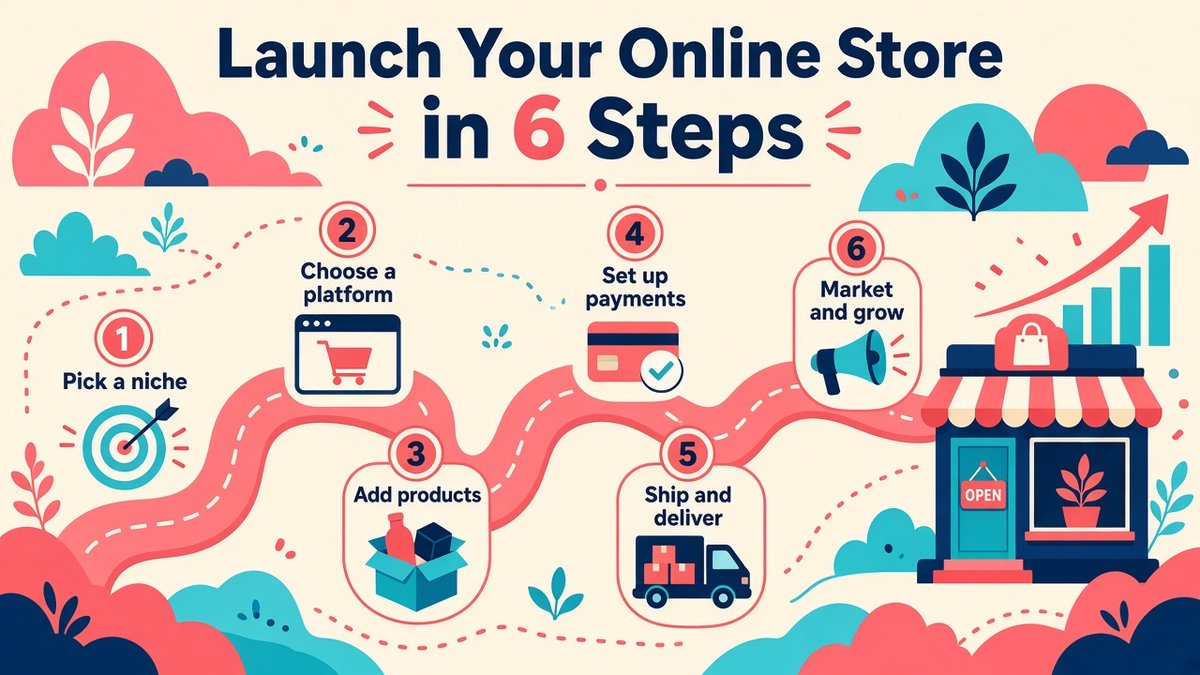
Roadmap to launch an online store: niche, platform, products, payments, shipping and marketing.
Pick a focused niche
Choose a specific audience and problem, such as eco-friendly gear for new parents or templates for freelance designers. A narrow niche makes marketing cheaper and helps you stand out from giant stores.
Choose a platform
Use a hosted platform so you do not have to manage servers. For digital products, courses and simple physical stores, an all-in-one tool like Systeme.io gives you sales pages, checkout, email marketing and automation in one place, with a free plan to start. Large catalogues may need a dedicated store builder.
Add products and great product pages
Write clear titles, benefit-focused descriptions, honest specs and FAQs. Use bright, well-lit photos or short videos from several angles. Show prices in your buyers’ currency, such as $, € or £.
Set up secure payments
Connect a trusted payment processor such as Stripe or PayPal, enable digital wallets and show clear shipping, tax and refund information before checkout to reduce abandoned carts.
Plan shipping, delivery and returns
Decide your shipping zones, delivery times and a simple returns policy. Offer tracking and consider free shipping above a minimum order value to lift average order size.
Market and grow
Drive traffic with SEO, social media, email and, once profitable, paid ads. Build an email list from day one; my guide to email marketing for small business shows how. If you also have a physical location, local SEO for small business helps nearby buyers find you.
Challenges and how to handle them
The rise of e-commerce brings real challenges. The good news is that each one has a clear, practical answer.
| Challenge | What to do |
|---|---|
| Strong competition | Own a niche, tell your brand story and offer better service than big marketplaces |
| Rising ad costs | Invest in SEO, content and email so you are not dependent on paid traffic |
| Building trust | Show reviews, real contact details, clear policies and secure checkout badges |
| Cybersecurity and fraud | Use reputable platforms and payment processors, strong passwords and two-factor login |
| Privacy laws | Follow GDPR in Europe and similar rules elsewhere: clear consent, privacy policy, easy unsubscribe |
| Returns and shipping costs | Accurate descriptions and size guides, fair return windows and negotiated carrier rates |
E-commerce trends to watch in 2026
Online selling keeps evolving. These trends are shaping e-commerce this year and are worth planning for:
- Social commerce: buying directly inside Instagram, TikTok and YouTube is growing fast, especially for younger shoppers.
- AI personalisation: product recommendations, smart search and AI chat assistants help shoppers find the right item and help small teams answer questions instantly.
- Faster, flexible delivery: same-day options, pickup lockers and click-and-collect raise expectations for every store.
- Sustainability: buyers increasingly reward recyclable packaging, carbon-neutral shipping and resale or refill programmes.
- Omnichannel selling: customers move between website, app, marketplace and physical store, and expect the same prices and service everywhere.
Frequently Asked Questions
What is the rise of e-commerce?
The rise of e-commerce is the long-term shift of shopping and selling from physical stores to websites, apps, marketplaces and social media. It is driven by smartphones, fast payments, better delivery and buyers who expect to shop any time, from anywhere.
Why is e-commerce growing so fast?
Mobile shopping, global reach, automation, rich customer data and secure digital payments make online buying easier for customers and cheaper to run for sellers. Each improvement in delivery and checkout removes another reason to shop offline.
Is it too late to start an online store in 2026?
No. Competition is higher, but tools are cheaper and simpler than ever. A focused niche, a clear offer and steady marketing still let small brands win customers that big marketplaces ignore.
How much does it cost to start an e-commerce business?
You can test an idea for almost nothing with a free plan on an all-in-one platform, then budget roughly $50 to $300 or €50 to €300 a month for tools, ads and samples as you grow. Inventory is usually the biggest cost, which is why many beginners start with digital products or print on demand.
What are the main challenges of e-commerce?
The biggest challenges are standing out from competitors, rising ad costs, building trust, handling returns and shipping, and keeping customer data secure while following privacy laws such as GDPR in Europe.
Will e-commerce replace physical stores?
Not completely. Most growing retailers mix both: an online store for reach and convenience, and physical spaces for experience, pickup and returns. The winners connect the two smoothly.
Final thoughts
The rise of e-commerce is one of the biggest business shifts of our time, and it is still accelerating. Customers want convenience, choice and speed, and businesses that sell online can reach more people at lower cost than ever before. The challenges are real, but with a focused niche, trustworthy store and steady marketing, even a one-person business can compete.
Your next step: pick your niche, write a one-sentence offer and build a simple sales page this week. Then collect emails, learn from your first customers and improve one thing every month.
Start selling online for free
Systeme.io gives you sales pages, checkout, email automation and online courses in one place, with a free plan to get started.
Affiliate link. I may earn a commission at no extra cost to you.
Affiliate disclosure: the Systeme.io links in this post are affiliate links. If you sign up through them, I may earn a commission at no extra cost to you.