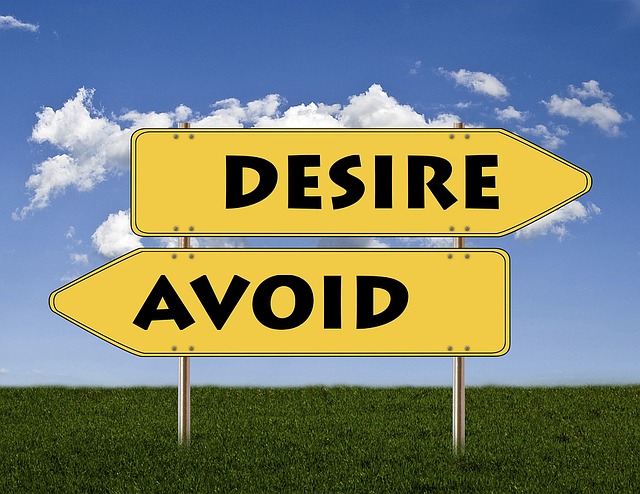
Crazy, isn’t it, that we purchase or consume that which we don’t really need?
I’ve often pondered how is it conceivable that only moments after I have said to myself, “NO, Joan, you don’t need that!” there I would be buying it and bringing it home!
I’m pretty certain I was absolutely clear.
What’s more, yet, I did it anyway? What’s with that?
What is it that has us needing stuff that is genuinely not good for us, holds no real reason and goes against the very thing we don’t need? Maybe even harms our financial goals.
That’s a question I have asked many times over the years as I counseled people on money behavior. They would make an extraordinary plan to follow, absolutely clear on what they were going to do. However, by their next appointment, just a couple weeks apart, they would have done exactly the opposite of what they planned.
Why did they harm the most dedicated and clear objectives and plans that they made?
Also, yet, there they sat with the results. Not to mention, along with a spontaneous purchase, came a flurry of different buys they don’t need.
Expensive things which they hadn’t even planned to buy.
Was it simply the act of making an arrangement? Did the plan feel like restriction or deprivation?
Or on the other hand, was it something different?
Good question. An inquiry in which there are a few responses. However, for today, how about we center on the two sabotages I see most frequently when we do the opposite of what we expected to do.
Let’s utilizes the example of making an Arrangement. Whether that is a written monetary plan or an affirmation you made for yourself, we should look at what happens when we do this.
In the first place, we don’t believe it. The reason is that most often when we make an arrangement, objective, or insistence, we tend to pick things we feel we Ought to do or not do — the ways of behaving we need to change that we are not pleased with — and hang our hats on those. Also, although we need to change things up, we don’t truly believe it. Yet…
We insist we can do it. Whether to spend less, save more, or not eat that forbidden food, we set our destinations on attaining that change. Indeed, even though, as mentioned above, we don’t truly accept we can. However at that point…
A previously unknown or unnoticed desire surges forward. A cool thing goes on sale. Or on the other hand, your best companion got one. Or on the other hand, you saw an extraordinary promotion on television about it.
Presently you have to have it. You persuade yourself you need it — even though it sabotages your arrangement.
You say to yourself, “Who knew I would need that when I made my arrangement? I work hard for my cash, certainly I merit it.”
In this way, you ignore your plan and you buy it at any rate. You throw out the best laid plan or affirmation and just do it. You persuades yourself that you cannot live without it. What’s more, the excuses and reasons pour forth.
However, then comes the second harm…
The receptive purchases. Once you’ve bought a new thing (yes, that purchase you had no idea you required), out of nowhere everything else looks ratty or forsaken in comparison.
The new deck furniture now needs new cushions, a cool outdoor carpet to set it all off and an awning for conceal. Or on the other hand, the new car now needs designer plates, floor mats, and top-of-the-line chrome wheels!
These receptive purchases, the urge to buy new things to match what you just bought, is known as the “Diderot Effect.” Life’s normal inclination to fill up with more. The normal inclination to gather, add, update, or build upon what you just purchased.
How do we overcome these two viewpoints which harm the best of intentions, plans, or goals?
There are numerous approaches to overcome these sabotages, such as reducing your exposure to that which pushes your buttons, perhaps a 30-day period (or longer) without buying anything new, or when you get one, you get rid of one.
Take your pick, mix it up.
Just keep in mind this very basic fact – – “… needing is just an choice your brain provides, not an order you have to follow.” (The Diderot Effect by James Clear)
Believe it or not. Just because it pops up as something you suddenly Need, it is only an option you do not have to follow.
Goodness, and by the way, this doesn’t only apply to your cash conduct. Keep your eyes and awareness open to how it shows up in other behaviors like your diet!
Shopping Dependence Questions the Need for a Reality Mind Why We Purchase Things We Don’t Need
So much openness to commercialism in the present society makes some of us address our shopping habit and question ourselves and how we are spending our time and money and if we are doing it wisely.
Shopping is one of those things that are an important evil; it is a piece like someone trying to lose weight. We have to shop and we have to eat, so it is all about balance and going out of our way to get the best deals for all of us, healthfully and budget insightful.
It is all about control and utilizing our brains instead of being sucked into the void of buying things we don’t need just think we do, we are bombarded by the sell, sell, and sell on a daily basis by the web, the TV, and trashy magazines. So it is time to take charge and find the best deals for us and figure out how to get the best bang for our buck. We are stuck in western society to purchase things on a daily basis, our lifestyles direct to us that we have to purchase things on a standard premise, things like fuel, food, clothing, electricity, insurance. We are in society where we are forced to purchase to make due.
So how do you live in a society that is turning most of us into shopping addicted drones? You use the framework to your advantage. Take advantage of all the bargains that are at our fingertips day to day, time to reverse the situation. Most of the discounts and deals are put out into the community with the majority of us not taking advantage of the coupons; we need to pay more consideration and take advantage of all that is put before us. Start buying what we need and not what we assume we need.
The thing that stops a great many people is discipline and a lazy attitude. Goodness, it is only 4 cents it’s not really worth the effort. Goodness, I was unable to be bothered paying attention to who has what specials on this week. Truly, the more prominent organizations make a considerable benefit from the more significant part, become the minority and start paying attention and take note. Start getting the limits you deserve, start using the vouchers that stay in your tote until they expire, let’s wake up and take advantage of a system that has us at its will. Let’s take all of our shopping enslavement and turn it around use the system to our favor.