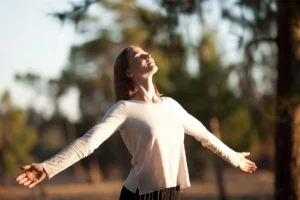
HERE below is a developed list of attributes God gave me to understand gratitude better:
- There is therapy in work – don’t resent it. Find the purpose in work. It’s good for us. It’s good to be grateful for the work we’ve been given.
- Gratitude is a process – it’s not as simple as it sounds, which is why I have committed to finding 10,000 reasons for my heart to find why God is good.
- Expectations are important in the process of gratitude – the higher the expectations, the more difficult the process of gratitude. Humility works with low expectations, of others especially.
- Grief’s burden is lightened by gratitude – gratitude is a key practice to be nurtured from as early in the grief process as possible. Particularly regarding finding ways to serve. Serving puts our mental emphases on others in a season (of grief) where there is already plenty of mental emphasis on the things we’re dealing with. Emphasis on others is light relief. Serving others grows us in many different ways.
- Gratitude sown reaps patience. Powerful, is that not? From patience comes a whole heap of other virtue.
- It simply must become a habit – making a list of 100 things per day means I am forced to look for items to be grateful about—engaging in the practice for 100 days facilitates the formation of a habit.
- Fear creeps in insidiously – the good thing is the inbuilt gratitude monitor puts out early alerts. Check what the fear is about. Attend to it, then get back on with the gratitude list.
- 10,000 Reasons is forcing me to look, to see, to discover, to find – there comes to be a craving to discover. A positive compulsion.
- Gratitude helps me realise life’s a challenge for all people – that life for every single person is a faith journey. Life is easy for nobody.
- Gratitude alleviates negative emotions – each person has anxieties to manage and emotions to contain and express.
- Seeing failure through a different lens – I’m glad of my failures, because without them I wouldn’t have seen my responses.
- Being grateful works best when it’s stimulated – it helps if we do something or interact with someone, which causes us to be grateful.
- Gratitude is forward-focused – we don’t need to look back anymore if I don’t want to.
- Waiting invites patience – delays are good. They train us in waiting, and in considering what we can do or think about while we wait, even to practice stillness and contemplation.
- The power of ONE – in a world in love with numbers, gratitude is perfectly content in anonymity. It needs to prove nothing to nobody.
- A antidote to frustration is gratitude – it is never good being overwhelmed on a regular basis—the more gratitude, the less frustration.
- Busyness facilitates frustration – when efficiency blurs into busyness, frustration is never too far away.
- Patience reminds us to slow down – this fruit of the Spirit causes us to do what we need to do to remain grateful; to slow down and remain under control.
- Gratitude is the antidote to many ills – start in this positive area and realise many spinoffs, including better mental health outcomes.
- Gratitude wards against worry – it seems impossible to be worried and grateful at the same time.
- Gratitude rewires the brain appreciatively – especially through the practice of finding 100 things per day to be grateful for.
- Realising that to seek is to take the journey forward positively – to capture the present and keep looking in the recent past through reflection for anything to appreciate propels the present positively.
Happiness Now! All About Gratitude and How You Can You Use Even When Times Are Bad
If you are looking to increase your feelings of happiness and a stress-free way of living, then you will find answers in this article. Perhaps you may have heard that expressing gratitude gives you a more positive outlook and releases stress but you are not sure how one could be grateful when circumstances are bad. Or you may have dismissed it as a myth that does not work. In this article, we will discuss how gratitude affects happiness, the research behind it, why it works, and how you could go about incorporating an easy gratitude practice that will yield
Gratitude is the quality of being thankful and grateful. It also carries the feeling of appreciation and gives value to an event, someone or something. Dr Robert Emmons from the University of California, Davis and Dr Michael McCullough from the University of Miami have been researching into gratitude and happiness for the last several years and their findings show a definite positive relationship between people who keep gratitude journals and happiness. They had a better feeling towards live and were more optimistic. They also found that these people exercised more, slept better and woke up more refreshed. In a study with young adults who did gratitude self-guided exercises, the study subjects reported higher levels of alertness, attentiveness, enthusiasm and energy.
Why does gratitude have such an uplifting impact? According to Dr McCullough, we have a natural tendency to take things for granted. But the moment we stop and think about all the ways we have been blessed with, our minds will start to use that as the new baseline for perceiving how happy we are.
The Hindu holy book, the Bhagavad Gita has a line in it that says “Even in the knocks of life, there are great gifts.” No matter how bad things are, there are always good things hidden underneath. In my own experience, I found that expressing gratitude shifts my thoughts from what I don’t have to what I already have that makes my life so enjoyable and whole. Fresh air and abundant sunshine are always there waiting for me every single day. These thoughts shift me into a more resourceful state of going about the daily affairs.
How do we practice gratitude? There are many ways to do it. One way is to keep a gratitude journal or a gratitude list. Another way may be to reflect on 5 good things that we feel grateful for that day before we go to bed at night. Instead of brooding on ways to solve our work problems before we drift off to sleep, we replace that with recounting all the good things that happened to us that day. Some therapists say that going into sleep with positive thoughts will also ensure a higher quality of sleep.
Yet another way to practice gratitude is to stop every now and then during the day and ask yourself what you are grateful for at that moment. Here I am typing on the computer as I write this article, and I am grateful for my computer working well, a superb internet connection that connects me to a world of information and the warm cup of tea right next to me. Taking little 30-second gratitude minute breaks like this not only allows lets me practice gratitude, it also recharges and uplifts me as I go through the day. That means a higher quality of work and more money in the bank