Knowing how to write an executive summary can decide whether your business plan, proposal or report gets read at all, because busy investors, managers and clients often read only the first page before deciding. A strong executive summary condenses the whole document into one or two pages: the problem, your solution, the key evidence and what you want the reader to do. This guide covers what to include, a 7-step writing process, examples for different documents, the right length, common mistakes and a template you can copy.
✔ Key takeaways
⏱ About 8 min read · the short version is right here
- An executive summary is a short standalone overview of a longer document that lets a busy reader understand it and decide without reading everything.
- Include the problem, your solution, the market, proof or traction, the team, a financial summary and a clear ask.
- Write it last, after the full document is finished, but place it first.
- Keep it to one or two pages for business plans and about one page or less for proposals and reports.
- Lead with your strongest point, use plain language and only include numbers you can back up.
📋 In this guide
What is an executive summary?
An executive summary is a brief overview at the start of a longer business document, such as a business plan, proposal, report or project plan. It should make sense on its own: someone who reads only the summary should understand what the document is about, why it matters and what decision you need from them.
It is not an introduction or a table of contents. An introduction sets up what follows; an executive summary gives away the conclusions up front. Think of it as the written version of a strong elevator pitch: short, clear and built to start a conversation.
📌 Who reads it
Investors, lenders, senior managers, grant panels and procurement teams often screen dozens of documents. The executive summary is your one chance to earn the full read.
What to include: the 7 core parts
Most executive summaries cover the same core parts. The order can change depending on your reader, but leave none out without a good reason.
| Part | What it answers | Tip |
|---|---|---|
| Opening statement | Who you are and what you do | One or two sentences; lead with the customer benefit |
| Problem | What pain or opportunity exists | Make it specific to a real customer group |
| Solution | How you solve it and why it is better | Focus on outcomes, not features |
| Market | Who buys and how big the opportunity is | Use credible, cited sources |
| Proof or traction | Why the reader should believe you | Real customers, results, pilots or milestones |
| Team | Who will deliver | Highlight relevant experience only |
| Financials and ask | What it costs, what it earns, what you want | State the exact ask and next step |
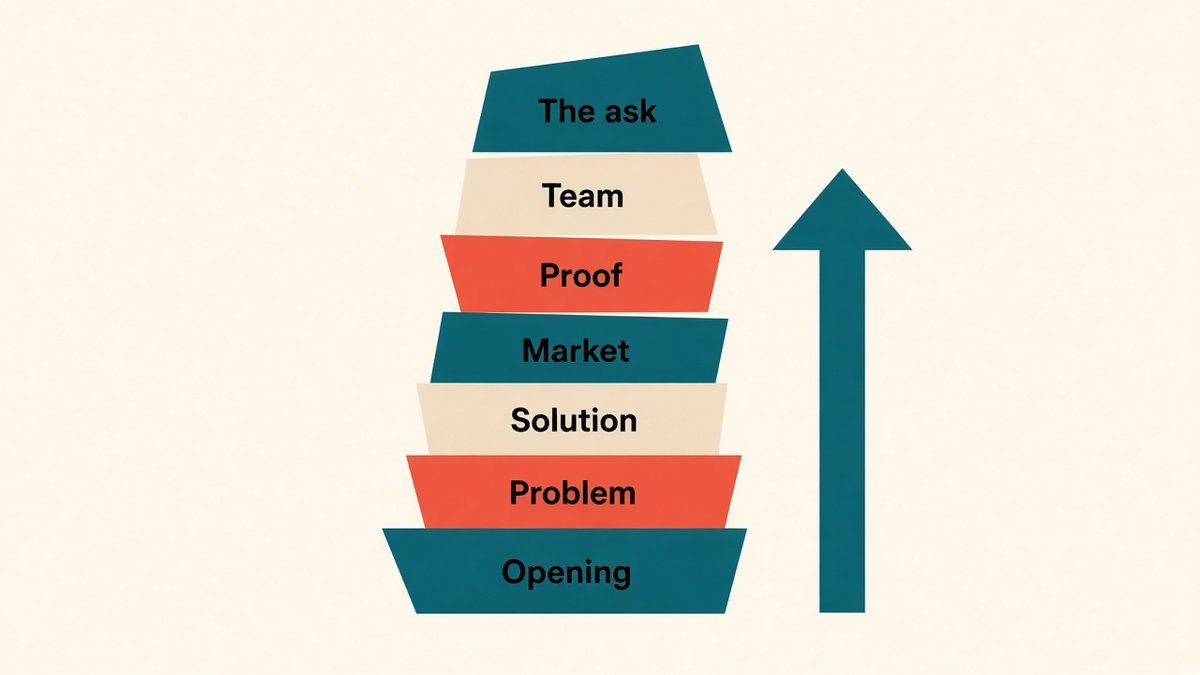
The seven building blocks of an executive summary, from the opening statement to the final ask.
A clear value proposition makes the opening and solution sections much easier to write, so sort that out first if it still feels fuzzy.
How to write an executive summary in 7 steps
Finish the full document first
You cannot summarise what you have not worked out. Write the business plan, proposal or report, then come back to the summary.
Know your reader and the decision
An investor wants return and risk; a manager wants cost and impact; a client wants results and price. Write down the one decision you want the reader to make.
Pull out one key point per section
Go through each section of your document and note its single most important message. These notes become your outline.
Write a strong opening
Start with the most compelling fact: a clear customer problem, a striking result or a direct statement of what you offer. Avoid starting with company history.
Draft the body in plain language
Write short paragraphs or a few bullet points for problem, solution, market, proof, team and financials. Cut jargon and acronyms.
End with a specific ask
State exactly what you want, such as “We are seeking $150,000 to open a second location” or “We ask for approval of the Q1 pilot budget”, and what happens next. Replace these sample figures with your real ones.
Edit hard and test it
Cut anything that does not help the decision. Ask someone unfamiliar with the project to read only the summary and explain it back to you.
💡 The two-minute test
Give the summary to a colleague and set a two-minute timer. If they cannot tell you what you do, why it matters and what you are asking for, rewrite the opening and the ask first.
Executive summary examples by document type
The core parts stay the same, but the emphasis changes with the document.
| Document | Main reader | What to emphasise |
|---|---|---|
| Business plan | Investors, lenders, partners | Market opportunity, business model, traction, financial projections, funding ask |
| Business proposal | Client or buyer | Client problem, proposed solution, results, price and timeline |
| Project report | Managers or stakeholders | Findings, conclusions, recommendations, decision needed |
| Grant application | Funding panel | Impact, eligibility, budget, measurable outcomes |
| Marketing plan | Leadership team | Goals, target audience, key channels, budget, expected results |
Business plan example (short version)
“GreenCrate delivers weekly boxes of locally grown vegetables to busy families in Manchester. Supermarket produce often travels long distances, and families tell us they want fresher food without extra shopping trips. Since launching our pilot, we have built a base of repeat subscribers and partnerships with local farms. Our three founders bring experience in logistics, farming and e-commerce. We are seeking funding to buy a second delivery van and expand to two nearby towns, and we would welcome a meeting to share our full forecast.”
Notice how it covers problem, solution, proof, team and ask in five sentences. For the full structure behind it, read how to write a business plan.
Business proposal example (short version)
“Your support team is spending a large share of each week answering the same customer questions. We propose a self-service help centre and chatbot set-up, delivered in six weeks, that will answer common questions automatically and free your team for complex cases. We have delivered similar projects for retail clients across the UK and Germany. The fixed project fee is set out in section 5, and we can start on 1 February once approved.”
For the rest of the document, see how to write a business proposal.
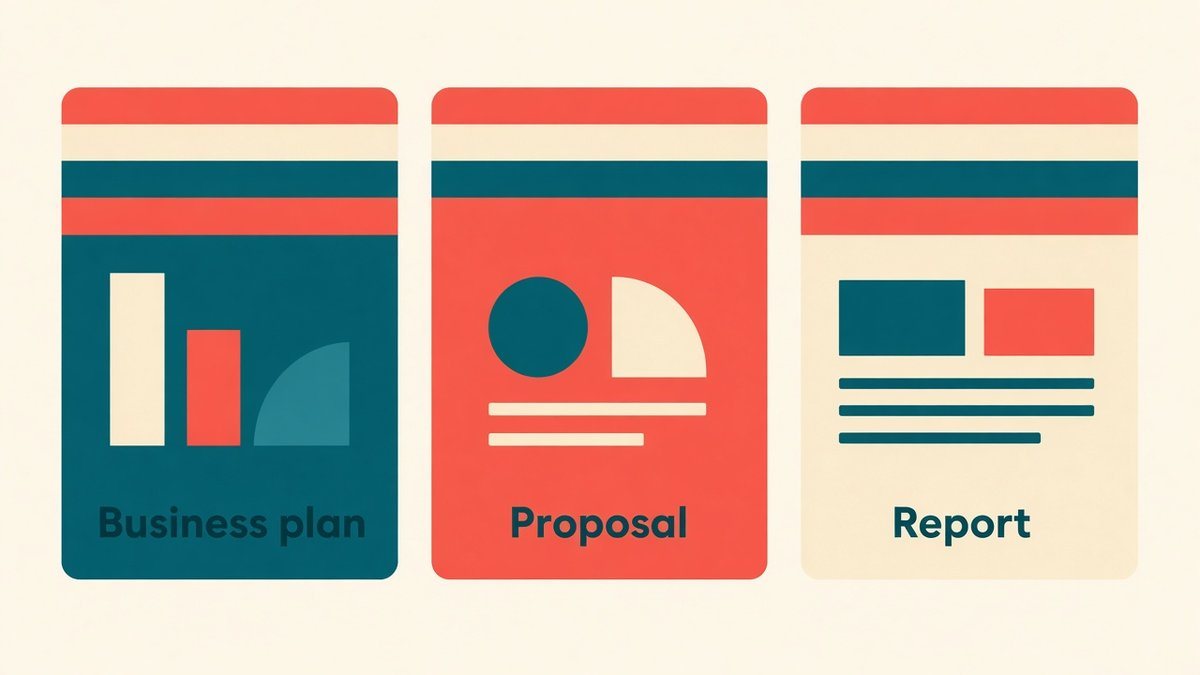
The same executive summary structure adapted for a business plan, a client proposal and a project report.
How long should it be?
There is no fixed rule, but these ranges work for most small business documents:
- Business plan: one to two pages, or roughly 5% to 10% of the full plan.
- Proposal: half a page to one page.
- Report: one page, often with a short bullet list of recommendations.
- Grant or tender: follow the word limit in the guidelines exactly; panels in the EU and UK often reject applications that exceed it.
Shorter is usually better. A tight one-page summary that a reader finishes is worth far more than a three-page summary they skim. If yours runs long, cut background detail and market history first, and keep the problem, proof and ask intact. Use headings or bold lead-ins so a reader can scan each part in seconds.
If you are pitching investors, keep the summary consistent with your deck and financial model, and check the figures against your break-even analysis.
Mistakes that make readers stop
- Writing it first. Summaries written before the document is finished usually promise things the plan does not support.
- Starting with history. “Founded in 2019…” wastes your best line. Lead with the problem or result.
- Copying the introduction. The summary must stand alone and include conclusions.
- Vague claims. “Huge market” and “best-in-class” mean nothing. Use specific, sourced facts.
- Unsupported numbers. Every figure should appear and be explained in the full document.
- No clear ask. If the reader does not know what you want, they will do nothing.
⚠️ Keep claims honest
Overstated revenue forecasts or invented traction can damage trust instantly, and misleading claims to investors or customers can create legal problems in the US, UK and EU. If a number is a projection, label it as one.
Copy-and-paste template
Copy this executive summary template into your document and replace each bracket with your own details. Then edit it down until every sentence earns its place.
Executive summary template
Opening: [Company or project name] helps [target customer] [solve problem] by [solution].
The problem: [Who has the problem, why it matters and what it costs them].
Our solution: [What you offer and why it works better than the alternatives].
Market and customers: [Who buys, how many there are, how you reach them; cite your sources].
Traction or proof: [Real customers, results, pilots, partnerships or milestones].
Team: [Who is behind it and why they can deliver].
Financial summary: [Revenue model, key figures and timeline, based on your actual forecast].
The ask: [What you want from the reader: funding amount, approval, budget or a meeting, and what happens next].
Before you send it, check how your summary positions you against rivals using a quick competitor analysis. Readers often ask “why you and not them?” first.
Frequently Asked Questions
What is the purpose of an executive summary?
Its purpose is to give busy readers a quick, standalone overview of a longer document so they can understand the main points and make a decision without reading everything.
How long should an executive summary be?
For most business plans, one to two pages. For proposals and reports, aim for about one page or less, and follow any word limits set by the reader.
Should I write the executive summary first or last?
Write it last, after the full document is finished, so it accurately reflects your conclusions. Place it at the very beginning of the document.
What is the difference between an executive summary and an introduction?
An introduction prepares the reader for what follows, while an executive summary gives the key findings, conclusions and ask up front and makes sense on its own.
Can an executive summary use bullet points?
Yes. Short bullet points work well for key findings, recommendations or financial highlights, but keep the opening and the ask as full sentences.
What should the last sentence of an executive summary be?
End with a clear ask and next step, such as the funding you are seeking, the approval you need or an invitation to meet.
Once you know how to write an executive summary, every business document gets easier to sell. Finish the full document, write for one reader and one decision, lead with your strongest point and close with a specific ask. Use the template above, run the two-minute test and you will give your plan or proposal the best chance of being read in full.