Learning how to control anger is one of the most valuable skills for your relationships, career and health. Everyone gets angry: when someone treats us unfairly, when plans fall apart or when we are tired and under pressure. Anger itself is not the problem. It is a natural signal that something matters to us. The problem is what we do with it. Outbursts can damage trust in seconds that took years to build. In this guide I explain what happens in the body when we get angry, how to calm down in the moment and long-term strategies to manage anger in a healthy way.
✔ Key takeaways
⏱ About 8 min read · the short version is right here
- Anger is a normal emotion; the goal is not to never feel angry but to control how you respond.
- Learn your early warning signs (tight jaw, racing heart, raised voice) so you can pause before reacting.
- In the moment, use a short pause, slow breathing and a change of scene to let the surge pass.
- Afterwards, identify triggers, challenge angry thoughts and solve the underlying problem calmly.
- Seek professional help if anger is frequent, hard to control or leads to aggression or damaged relationships.
⚠️ Please note
This article is general information, not medical or psychological advice. If anger leads to aggression, violence or harm, or feels out of control, please seek help from a doctor, counsellor or local support service.
What happens when we get angry?
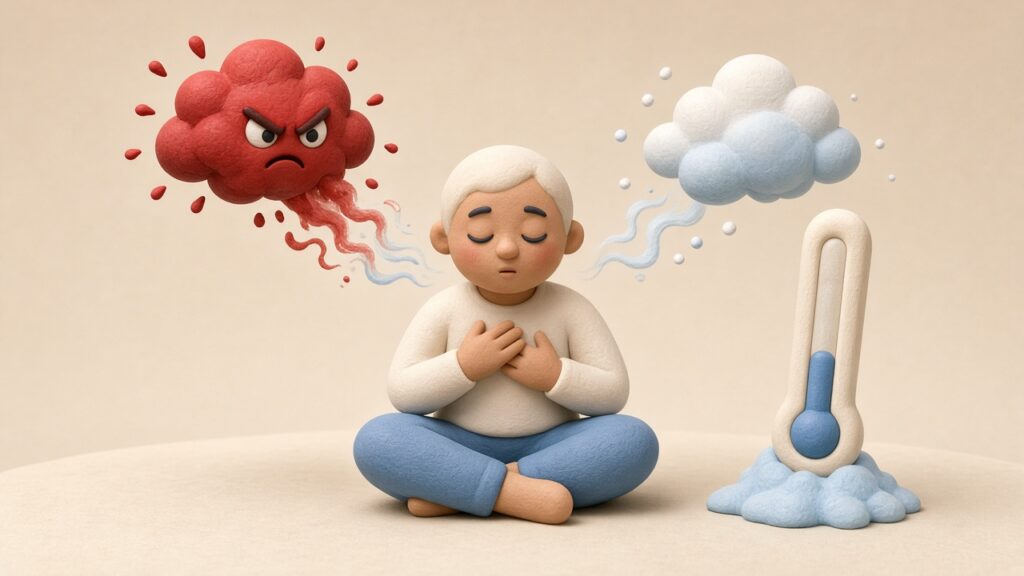
When you feel threatened or frustrated, your body triggers a fight-or-flight response. Stress hormones such as adrenaline rise, your heart beats faster, muscles tense and breathing speeds up. At the same time, the parts of the brain responsible for careful thinking become less active. That is why we often say or do things in anger that we would never choose when calm.
The good news is that this surge is temporary. If you can avoid reacting during the first few minutes, your body begins to settle and clear thinking returns.
Know your early warning signs
| Type | Common signs |
|---|---|
| Physical | Clenched jaw or fists, tight shoulders, racing heart, feeling hot, shallow breathing |
| Emotional | Irritation, frustration, feeling disrespected, resentment, impatience |
| Thoughts | “This is so unfair”, “They always do this”, “I have to win this argument” |
| Behaviour | Raised voice, interrupting, sarcasm, pacing, slamming things, typing fast |
The earlier you notice these signs, the easier it is to choose a calmer response. Many people find it helpful to rate their anger from 1 to 10 and take action at 3 or 4, not at 9.
How to control anger in the moment
Pause
Stop before you speak or act. Even a few seconds can prevent words you regret. If possible, say “I need a minute” and step away.
Breathe slowly
Breathe in through your nose for four counts and out through your mouth for six to eight counts. Longer out-breaths calm the nervous system.
Relax your body
Unclench your jaw and hands, drop your shoulders and loosen your posture. Calming the body helps calm the mind.
Change the scene
Walk to another room, step outside or get a glass of water. Movement helps burn off the adrenaline surge.
Use a calming phrase
Repeat something like “Slow down”, “This will pass” or “I can handle this calmly”.
Delay decisions and messages
Do not send that email, text or social media post while angry. Write it if you need to, but wait at least an hour, or until tomorrow, before sending.
💡 The 90-second idea
Neuroscientist Jill Bolte Taylor popularised the idea that the chemical surge of an emotion lasts around 90 seconds unless we keep re-triggering it with angry thoughts. Ride out the first wave without acting, and the rest becomes far easier to manage.
Long-term strategies to manage anger
1. Identify your triggers
Keep a simple anger diary for two weeks: what happened, how angry you felt, what you thought and what you did. Patterns appear quickly, for example traffic, feeling interrupted, money worries or being tired and hungry.
2. Challenge angry thoughts
Anger is often fuelled by thoughts such as “always”, “never” or “they did it on purpose”. Ask: Is that really true? Is there another explanation? What would a calm person think here? Replacing extreme thoughts with more balanced ones lowers the intensity. If you tend to replay arguments for hours, my guide on how to stop overthinking can help.
3. Express anger assertively, not aggressively
Once calm, explain how you feel and what you need using “I” statements: “I felt frustrated when the report was late because it delayed the client. Can we agree on a new deadline process?” This addresses the problem without attacking the person.
4. Solve the underlying problem
Sometimes anger points to a real issue that needs fixing: an unfair workload, a recurring conflict, a boundary being crossed. Focus your energy on practical solutions rather than blame.
5. Look after your body
Tiredness, hunger, alcohol and chronic stress all make anger more likely. Regular exercise, sleep, healthy meals and limiting alcohol raise your tolerance for frustration.
6. Build emotional intelligence
Understanding your emotions and other people’s makes conflicts less likely to escalate. My guide on how to improve your emotional intelligence offers practical exercises, and my article on self-control explains why it is such a powerful success skill.
7. Practise empathy and listening
Try to understand the other person’s perspective before responding. Ask questions, listen fully and summarise what you heard. People who feel heard are less defensive, which calms both sides.
8. Use humour carefully
Light humour can defuse tension and help you see a situation in perspective, but avoid sarcasm, which usually makes things worse.

Controlling anger at work
- Take a break before replying to a frustrating email or comment.
- Stick to facts about the situation, not judgements about the person.
- Raise issues privately rather than in meetings or group chats.
- Prepare for known triggers, such as difficult clients or tense meetings, with a plan for how you will respond.
- Watch your body language: crossed arms, pointing and a raised voice escalate conflict. My guide on body language explains how to appear calm and confident.
Difficult customers are a common trigger for business owners and service staff. My guide to the most difficult clients and how to handle them offers practical scripts.
Anger in relationships and at home
Agree on a “time-out” signal with your partner or family, so either person can pause an argument and return to it later when calm. Avoid discussing serious issues when tired, hungry or late at night. Focus on one issue at a time, avoid bringing up past arguments and look for solutions together. Children learn how to handle anger by watching adults, so calm responses teach them valuable lessons too.
Create your personal anger plan
A written plan makes calm responses more automatic, because you decide in advance what to do instead of improvising under stress. Answer these questions on one page and keep it somewhere you will see it:
- My top three triggers are: for example, being interrupted, running late, feeling criticised in front of others.
- My early warning signs are: for example, tight shoulders, a hot face, a sharp tone.
- When I notice them, I will: pause, take five slow breaths and say “Give me a minute.”
- If I need more time, I will: go for a short walk or step outside for ten minutes.
- Afterwards, I will: write down what happened, what I was thinking and what I need, then talk about it calmly.
- To lower my baseline stress, I will: sleep seven to eight hours, exercise three times a week and limit alcohol.
Review the plan every few weeks. Notice which steps work best for you and celebrate each time you handle a tough moment better than before.
Common mistakes in managing anger
- Venting aggressively by punching pillows or shouting: research suggests this often increases anger rather than releasing it.
- Bottling it up until it explodes later.
- Reacting by text or email while still angry.
- Blaming others entirely without looking at your own triggers and responses.
- Ignoring the physical side, such as sleep, stress and alcohol.
When to seek help
If anger feels frequent or uncontrollable, leads to threats, aggression or violence, damages your relationships or job, or comes with low mood, anxiety or substance use, speak to a doctor or counsellor. Anger management programmes and therapies such as cognitive behavioural therapy are effective and widely available. Getting help is a strong, responsible step.
Frequently Asked Questions
Is it normal to feel angry?
Yes. Anger is a natural emotion that signals something feels unfair, threatening or frustrating. It becomes a problem when it is frequent, intense, lasts a long time or leads to behaviour that hurts you or others, such as shouting, aggression or damaged relationships.
How can I calm down quickly when I am angry?
Pause and step away if you can, breathe slowly with longer out-breaths, count to ten or more, relax your shoulders and jaw, and avoid making decisions or sending messages until the surge has passed. A short walk or splashing cold water on your face can also help.
What causes anger problems?
Common contributors include stress, tiredness, hunger, feeling disrespected or unheard, unmet expectations, past experiences, alcohol, and underlying issues such as anxiety or depression. Identifying your personal triggers is an important step in managing anger.
How do I control anger at work?
Notice early signs, take a short break before responding, focus on facts rather than personal attacks, use calm and specific language, and raise issues privately rather than in front of others. If a situation repeatedly triggers you, plan how you will respond in advance.
Is it healthy to suppress anger?
Constantly bottling anger up can lead to resentment, stress and sudden outbursts later. A healthier approach is to calm down first, then express the feeling and the need behind it assertively and respectfully, and work on solving the underlying problem.
When should I get help for anger?
Consider professional help if your anger feels out of control, happens often, leads to aggression or violence, harms relationships or work, or if you use alcohol or drugs to cope. A doctor, counsellor or anger management programme can provide effective strategies.
Final thoughts
Learning how to control anger is about responding instead of reacting. Notice your warning signs early, pause, breathe and step away when needed. Afterwards, identify triggers, challenge angry thoughts, express your needs assertively and solve the real problem. Look after your body and build emotional intelligence over time. With practice, you can keep anger’s useful message while losing its destructive power.