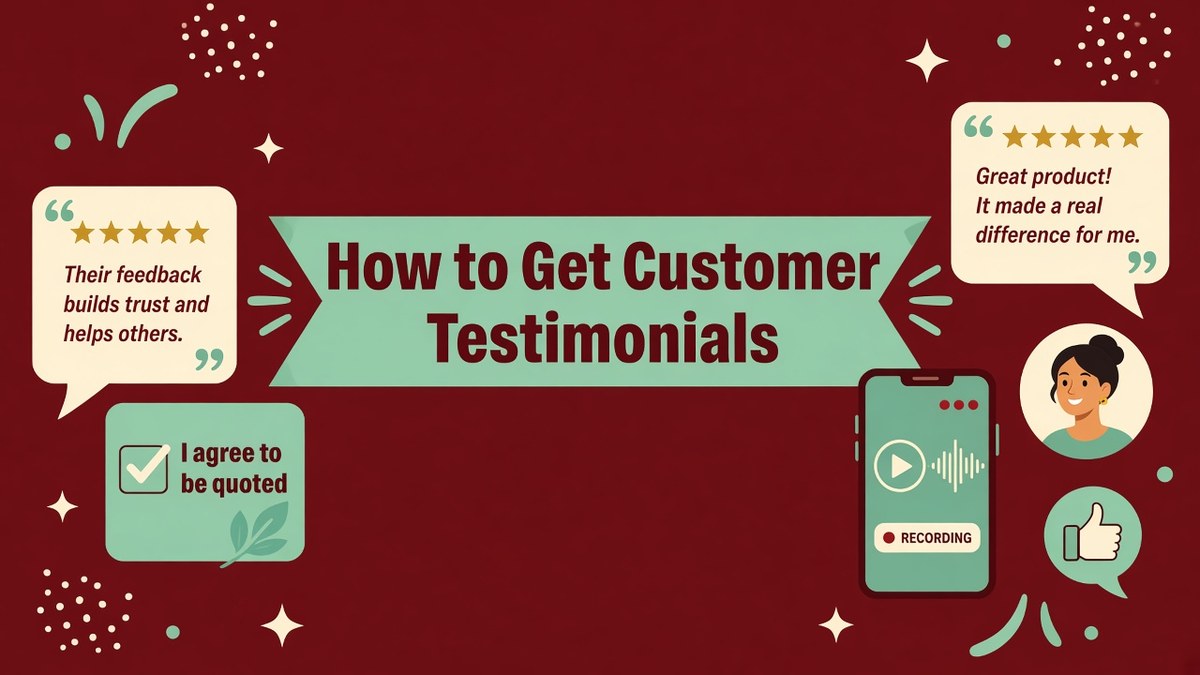
Learning how to get customer testimonials is one of the simplest ways to grow a small business, because nothing persuades a new buyer like a real customer explaining the result they got. Yet most business owners either never ask or ask in a way that produces vague praise like “Great service!”. In this guide I show you how to get customer testimonials that are specific and believable: when to ask, the exact questions to use, copy-and-paste request templates, the best formats, how to automate the whole process, and the FTC, UK and GDPR rules to follow when you publish them.
✔ Key takeaways
⏱ About 10 min read · the short version is right here
- Ask at a high point: right after a result, a renewal, a thank-you message or a five-star rating.
- Make it easy: send one short link, three guiding questions and an option to approve a draft you write for them.
- Specific beats generic: testimonials with a before, an after and a number are far more persuasive.
- Use a mix of formats, from short quotes to video and case studies, and place them next to your call to action.
- Automate requests with your CRM or email tool so asking happens every time, not only when you remember.
- Never fake, buy or selectively gate reviews, and get written permission before using a customer’s name or photo.
📋 In this guide
- Why customer testimonials matter so much
- When to ask for a testimonial
- 9 proven ways to get customer testimonials
- Questions that get specific, persuasive testimonials
- Testimonial request templates you can copy
- Testimonial formats compared
- Where to use testimonials for the biggest impact
- How to automate testimonial requests
- FTC, UK DMCC and GDPR rules for testimonials
- Frequently Asked Questions
- Final thoughts
Why customer testimonials matter so much
A testimonial is social proof. When a prospect is unsure, hearing from someone like them who took the same risk and got a good outcome lowers the perceived risk of buying. Testimonials also answer objections you cannot answer yourself without sounding biased, such as “Is it worth the price?” or “Will this work for a business my size?”.
For service businesses, coaches, agencies and online stores alike, good testimonials can lift conversions on sales pages, make cold emails warmer and give your sales calls credibility from the first minute. They are also free marketing assets you can reuse for years.
When to ask for a testimonial
Timing is the biggest factor in whether customers say yes. The best moments are when the customer is feeling the value most strongly:
- Right after a measurable win: a project delivered, a goal hit, a problem solved.
- When they praise you unprompted: reply with thanks and ask if you can quote them.
- After a high satisfaction score: a 9 or 10 on a net promoter score survey or a five-star rating.
- At renewal or repeat purchase: a customer who comes back is clearly happy.
- At the end of onboarding: if your client onboarding process ends with a quick check-in, add the ask there.
💡 Ask within 48 hours
Enthusiasm fades quickly. Customers asked within a day or two of a good result reply far more often than those asked weeks later, and their wording is more vivid.
9 proven ways to get customer testimonials
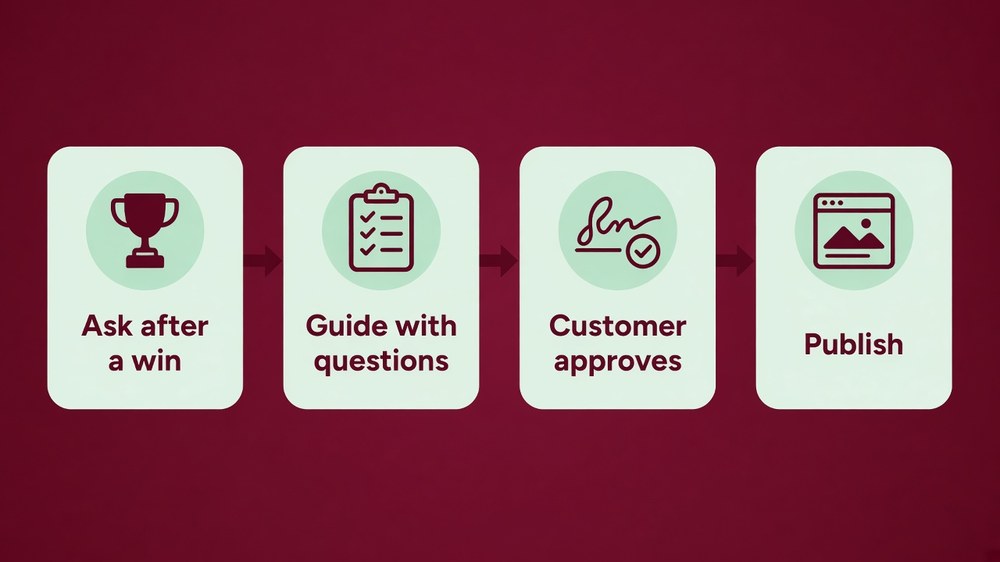
A simple testimonial request flow: ask after a win, guide with questions, approve and publish.
Simply ask, personally
A short personal email or message from you gets more replies than a generic form. Mention the specific result you helped them achieve.
Send a short feedback form
Use a form with three or four questions and a permission checkbox. Keep it under two minutes to complete.
Offer to write a draft for approval
Busy customers often prefer you to turn their comments from a call or email into a short quote that they approve or edit. Only publish what they confirm.
Add the ask to your email automation
Build a testimonial request into your post-purchase or end-of-project sequence so it goes out every time.
Ask at the end of calls
When a client says something great on a call, ask: “Could I quote you on that?” Then send it to them in writing to confirm.
Collect video with a simple link
Tools that record video in the browser let customers record a 30 to 60 second clip from their phone without downloading anything.
Turn reviews into testimonials
If a customer leaves a public review on Google, Trustpilot or a marketplace, ask permission to feature it on your website too.
Interview your best clients for case studies
A 20 minute interview can produce a full case study plus several short quotes for different pages.
Pair requests with your referral program
Happy customers who give a testimonial are often willing to refer friends. My guide on how to start a referral program shows how to combine the two, but keep rewards for referrals, not for positive reviews.
Questions that get specific, persuasive testimonials
The questions you ask shape the testimonial you get. Open questions that follow a before and after story produce the most persuasive answers:
- What problem were you facing before you worked with us?
- What almost stopped you from buying, and what made you go ahead?
- What specific result have you seen? Any numbers you can share?
- What did you like most about working with us?
- Who would you recommend us to, and why?
📌 Three questions are enough
If you only use three, choose the problem before, the result after, and the main reason they would recommend you. Those map directly onto the doubts a new buyer has.
Testimonial request templates you can copy
Adapt these short templates to your own voice. Personalise the first line every time.
Email template: “Hi [Name], it was great to see [specific result] this week. Would you be open to sharing a few sentences about your experience? It helps other [type of business] decide if we are the right fit. Here are three quick questions: [questions]. If it is easier, reply with a few notes and I will draft something for you to approve. No pressure at all, and thank you either way.”
Short message template: “Thanks so much for the kind words, [Name]! Would you mind if I shared what you said on our website, with your first name and company? Happy to send you the exact wording first.”
Follow-up template: “Hi [Name], just a gentle nudge on the testimonial request. If now is not a good time, no problem at all.” Send one follow-up only.
Testimonial formats compared
| Format | Effort for customer | Persuasion | Best place to use |
|---|---|---|---|
| Short written quote | Very low | Medium | Landing pages, checkout, ads |
| Detailed written testimonial | Low | High | Sales pages, service pages |
| Video testimonial | Medium | Very high | Homepage, sales page, social media |
| Case study | Medium (interview) | Very high | Sales calls, proposals, B2B pages |
| Star rating and review | Very low | Medium (volume matters) | Google Business Profile, product pages |
| Screenshot of a message | None (with permission) | Medium | Social media, email |
Most small businesses do best with a mix: plenty of short quotes and reviews for volume, plus two or three detailed case studies or videos for your most important offers.
Where to use testimonials for the biggest impact
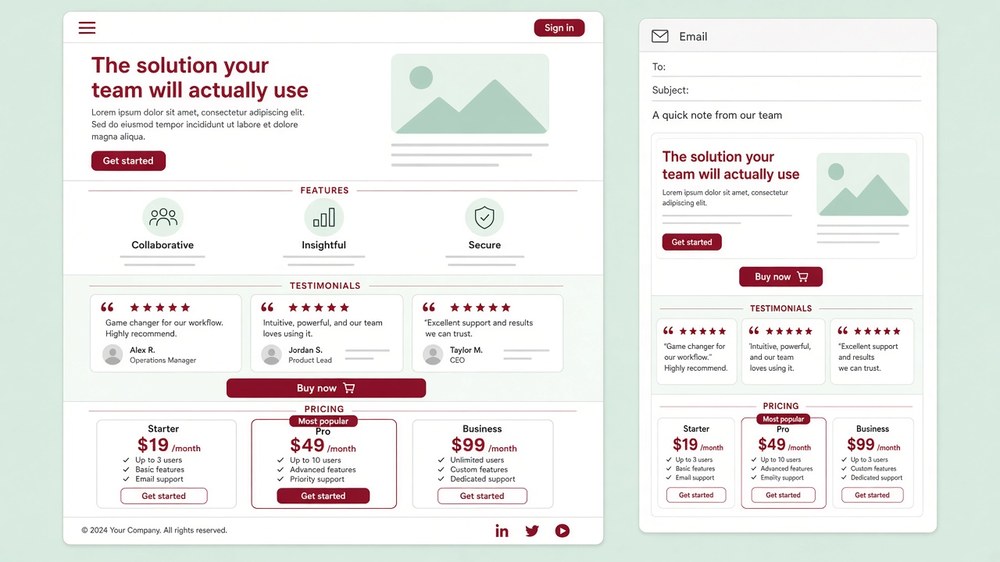
Where to place testimonials: next to the call to action, on pricing and checkout pages, and in emails.
- Next to every call to action: a short quote beside the button reduces last-second doubt. See my guide on how to create a landing page for layout tips.
- On pricing and checkout pages: pick testimonials that talk about value for money.
- In your email sequences: add one story per email in your welcome email sequence.
- In proposals and sales calls: match the case study to the prospect’s industry or size.
- In your Google Business Profile: reviews there also help with local SEO for small business.
- On social media and ads: real words from customers often outperform polished brand copy.
💡 Match the testimonial to the objection
Tag each testimonial by the objection it answers, such as price, time, or results, and place it where that objection appears on the page.
How to automate testimonial requests
Asking manually works for your first few customers, but it breaks as you grow. Automation makes sure every happy customer gets asked at the right moment.
If you run a service business or agency, GoHighLevel includes reputation management: it can send review and testimonial requests by SMS and email automatically when a deal moves to “won” or an appointment is marked complete, then route happy customers to your Google profile and unhappy ones to a private feedback form so you can fix problems quickly. Plans start at $97 a month with a 14-day free trial.
If you sell courses, coaching or digital products, Systeme.io lets you add a testimonial request email to your post-purchase automation and collect answers with a simple form, then display the best quotes on your funnel pages. It has a free plan for up to 2,000 contacts.
| Tool | How it helps with testimonials | Best for |
|---|---|---|
| GoHighLevel | Automated review requests by SMS and email, review widgets, CRM triggers | Local service businesses, agencies |
| Systeme.io | Post-purchase email automation, forms, funnel pages to display quotes | Coaches, course creators, info products |
| Form tool + spreadsheet | Manual collection with a permission checkbox | Testing with your first 10 to 20 customers |
Whatever you use, connect testimonial requests to your wider customer retention strategies, because the customers you look after best are the ones most likely to speak up for you.
FTC, UK DMCC and GDPR rules for testimonials
Testimonials are marketing claims, so regulators treat them seriously. This is general information, not legal advice.
- US (FTC): the FTC rule on consumer reviews and testimonials, in force since October 2024, bans fake reviews and testimonials, buying positive reviews and misrepresenting reviews, with civil penalties possible. The Endorsement Guides also require you to disclose any material connection, such as a discount given for a testimonial.
- UK (DMCC Act): since April 2025 the Digital Markets, Competition and Consumers Act lists fake reviews and concealed incentivised reviews as banned practices. Do not offer rewards only for positive reviews.
- EU: consumer law requires businesses that publish reviews to say whether and how they check they come from real customers, and bans fake reviews.
- GDPR (UK and EU): a testimonial with a name, photo, job title or company is personal data. Get clear written permission for how and where you will use it, and remove it if the customer asks.
- Typical results: if a testimonial shows an unusually good result, do not imply that everyone will get it.
⚠️ Never edit the meaning
You can fix typos and shorten a testimonial, but do not change what the customer meant or combine quotes from different people. Keep the original and their written approval on file.
Frequently Asked Questions
How do I ask a customer for a testimonial?
Ask personally and soon after a good result, mention the specific outcome, include two or three guiding questions and offer to draft the wording for their approval. Send one gentle follow-up only.
What should a good testimonial include?
The problem the customer had before, the specific result they got, ideally with a number, and why they would recommend you. A name, photo or company makes it more credible, with permission.
Can I offer an incentive for a testimonial?
You can thank customers, but incentives must not depend on the testimonial being positive, and any incentive should be disclosed. Fake or bought reviews are banned in the US, UK and EU.
Do I need permission to use a customer testimonial?
Yes. Get written permission that covers where you will use it and whether you can show their name, photo or company. Under GDPR they can withdraw consent later.
Are video testimonials better than written ones?
Video is usually more persuasive because people can see and hear a real customer, but written quotes are easier to collect and place. Most businesses do best with both.
How many testimonials do I need?
Start with three to five strong, specific testimonials for your main offer, then keep collecting. Volume matters most for public star ratings, while quality matters most on sales pages.
Final thoughts
Knowing how to get customer testimonials comes down to a simple habit: ask happy customers at the right moment, guide them with good questions, make it effortless and get clear permission. Put the best stories next to your calls to action, automate the requests so they happen every time, and stay honest about results and incentives.
Your next step: list five customers who got a great result recently and send each one a short personal request this week.
Automate your review and testimonial requests
GoHighLevel sends review and testimonial requests by SMS and email automatically after every completed job or deal, with a 14-day free trial.
Affiliate link. I may earn a commission at no extra cost to you.
Affiliate disclosure: some links in this post are affiliate links, so I may earn a commission at no extra cost to you. I only recommend tools I’d use myself.