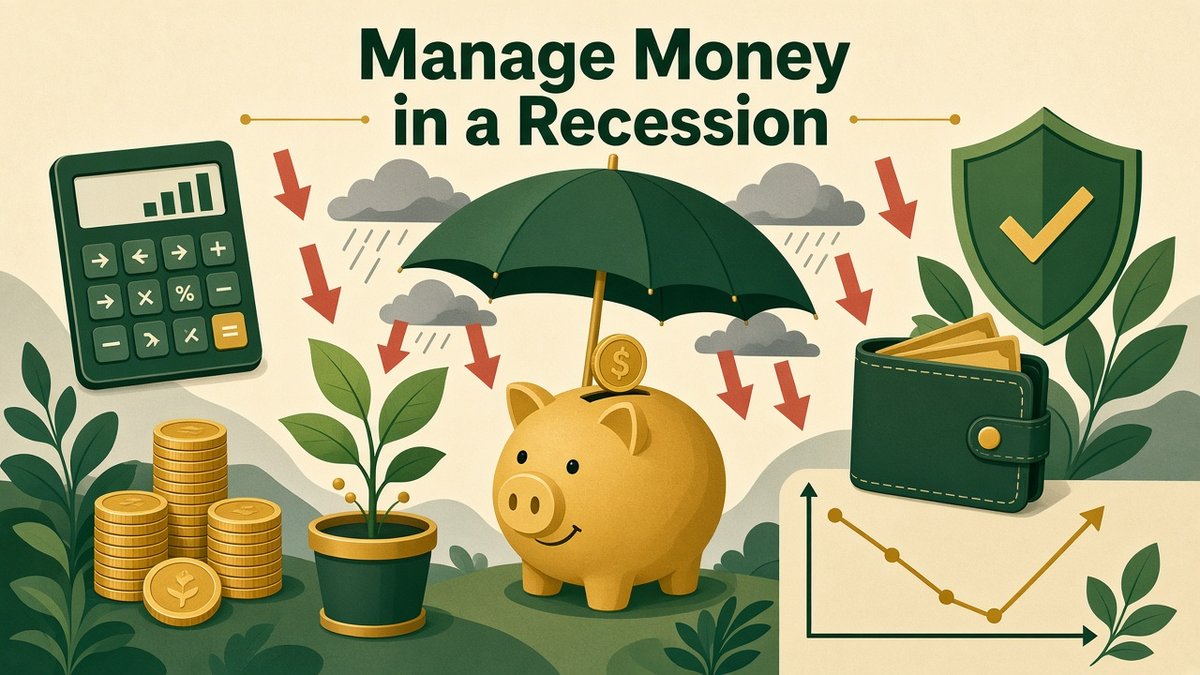
Learning how to manage your finances during a recession is the best way to protect your family, your job and your savings when the economy slows down. Prices may stay high while hiring freezes, layoffs rise and markets swing. The good news is that you do not need to be an economist to stay safe. With an emergency fund, a clear budget, smart debt choices and a steady investing habit, you can get through a downturn calmly and even come out stronger. This 2026 guide gives you a simple, practical plan you can start today, with examples in dollars and euros.
✔ Key takeaways
- Build cash first: aim for 3 to 6 months of essential expenses, or 6 to 12 if your income is unstable.
- Do a budget audit and cut costs in the order of least pain: subscriptions, fees, insurance shopping, then lifestyle.
- Pay high-interest debt (credit cards, payday loans) before anything else; keep paying at least the minimum on all debts.
- Protect your income: update your CV, grow skills and start a small side income before you need it.
- Keep investing for long-term goals if your cash buffer is solid; avoid panic selling.
- Review insurance, your credit score and your plan every month until the economy recovers.
📋 In this guide
Why recessions hit household finances
A recession is usually defined as a significant decline in economic activity that lasts several months, often shown by falling GDP, rising unemployment and weaker spending. In the US, the NBER officially dates recessions; in Europe, people often use two consecutive quarters of shrinking GDP as a rule of thumb.
For households, the impact shows up in four places: job security, income (fewer bonuses, overtime or freelance projects), the cost of borrowing and the value of investments. Some people barely notice a recession, while others lose a job and face months of reduced income. Because you cannot predict which group you will be in, the smart move is to prepare as if your income could drop.
📌 Quick definition
Managing your finances during a recession means increasing your cash buffer, lowering fixed costs, reducing expensive debt and protecting your income so a job loss or pay cut does not turn into a financial crisis.
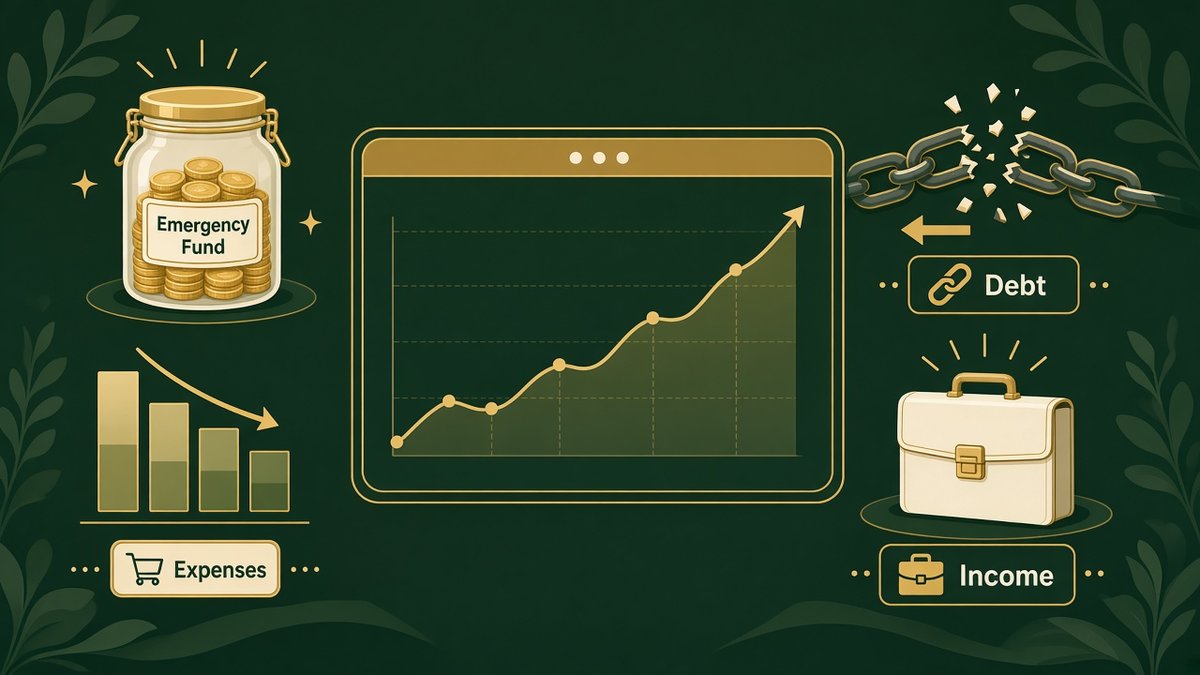
Recession money dashboard: grow your emergency fund, shrink expenses, break expensive debt and keep income steady.
Early warning signs to watch
You do not have to wait for headlines to act. Watch for signals close to home and in the wider economy:
- At work: hiring freezes, cancelled projects, reduced overtime, delayed bonuses or budget cuts.
- In your industry: layoffs at competitors, falling orders or clients paying invoices later.
- In the economy: rising unemployment claims, falling consumer confidence and central banks changing interest rates quickly.
- In your own accounts: relying on credit cards for basics, savings shrinking month after month, or missing payments.
If you notice two or more of these, start the plan below now. Preparing six months early is much easier than reacting after a pay cut.
Recession money moves: do this, not that
| Instead of this | Do this |
|---|---|
| Spending your full pay cheque every month | Save first: automate $200 or €200 to a separate savings account on payday |
| Keeping many unused subscriptions | Audit and cancel; keep only what you use weekly |
| Paying only the minimum on a 24% APR credit card | Attack the highest-interest balance with every spare dollar or euro |
| Selling investments after a market drop | Keep investing on schedule if your emergency fund is solid |
| Taking on a new car loan or big purchase | Delay large purchases until your job and income feel stable |
| Relying on a single income source | Build a small side income and keep your skills sharp |
7-step plan to manage your finances during a recession
Here is the step-by-step plan I would follow. You can work through it in a weekend and then review it monthly.
Do a full budget audit
List every income source and every expense from the last three months of bank and card statements. Split spending into essentials (housing, utilities, food, transport, insurance, minimum debt payments) and non-essentials. This shows your real “survival number”: the minimum you need each month.
Build or boost your emergency fund
Aim for 3 to 6 months of essential expenses, or 6 to 12 months if you are self-employed or work in a cyclical industry. If your essentials are $3,000 or €2,800 a month, a three-month target is about $9,000 or €8,400. Keep it in a high-yield savings account or money market account that is easy to access but separate from daily spending. Start with a mini goal of $1,000 or €1,000 if the full amount feels far away.
Cut costs in the order of least pain
Start with easy wins: unused subscriptions, bank fees, premium phone plans and impulse delivery orders. Then shop around for insurance, energy and internet deals. Only after that look at bigger changes such as cooking more, delaying travel or moving to a cheaper car. Redirect every saved dollar or euro to your emergency fund.
Pay down high-interest debt
Credit cards, buy-now-pay-later balances and payday loans can cost 20% to 30% or more a year. Paying them off is a guaranteed return. Keep minimums on everything, then use the avalanche method (highest interest first). If you are struggling, call lenders early to ask about hardship plans or lower rates.
Protect and diversify your income
Update your CV and LinkedIn profile, keep in touch with your network and learn one in-demand skill. Start a small side income now, such as freelancing, tutoring, selling unused items or consulting, so you have a fallback if your main income drops. Even $300 or €300 a month makes a big difference.
Keep investing steadily for the long term
If your emergency fund is in place and high-interest debt is under control, continue regular contributions to retirement accounts such as a 401(k), IRA or your European pension plan. Buying through a downturn with fixed monthly amounts (dollar-cost averaging) lets you buy more units at lower prices.
Review your plan every month
Set a 30-minute money check-in each month. Track your survival number, emergency fund balance, debt balances and credit score. Adjust quickly if your income changes.
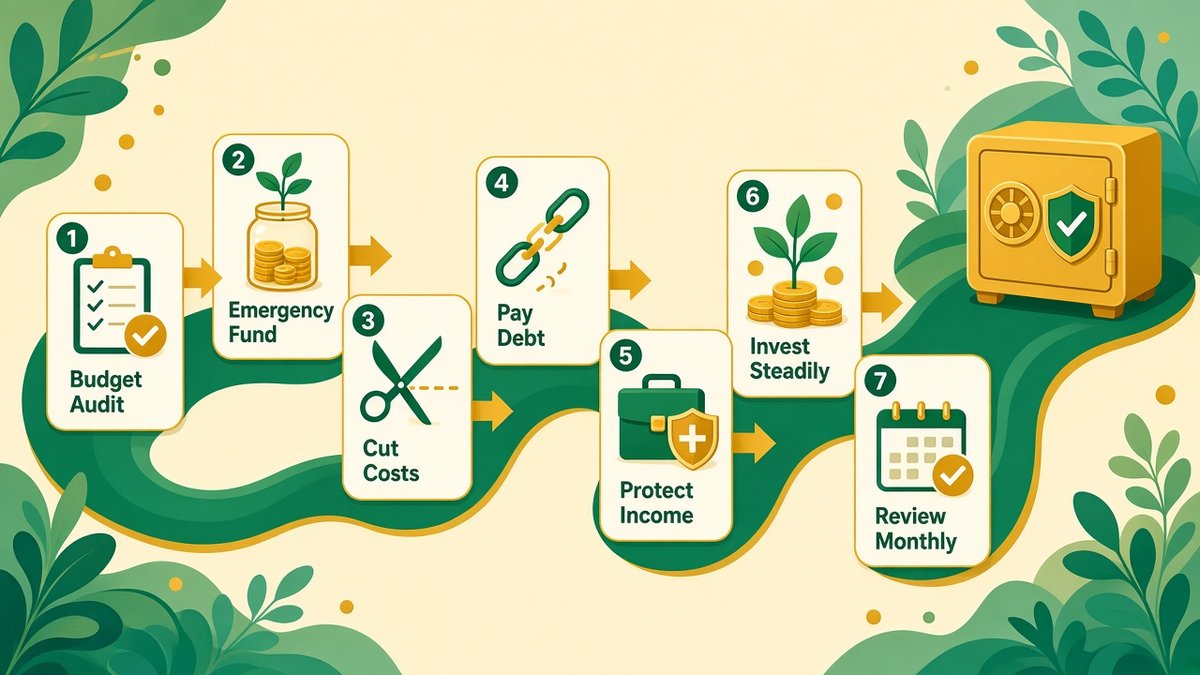
Seven practical steps to manage your finances during a recession and keep your money safe.
💡 Use a simple budgeting rule
The 50/30/20 rule (needs, wants, savings) is a good starting point. In a recession, many people temporarily switch to 60/10/30: keep needs steady, shrink wants and push more into savings and debt payoff.
Which debts to pay first
Not all debt is equal. During a recession, cash flow and flexibility matter more than paying off cheap loans early. If you want the theory, read my explainer on good debt vs bad debt. In practice, use this order:
| Priority | Debt type | What to do |
|---|---|---|
| 1 | Payments that protect your home, utilities and car for work | Never miss; contact the lender early if income drops |
| 2 | Credit cards, payday loans, BNPL (20%+ APR) | Pay aggressively with the avalanche method |
| 3 | Personal loans and car loans (8-15%) | Pay on time; overpay only once cash buffer is built |
| 4 | Low-rate mortgage or student loans (under 5%) | Pay the minimum; keep extra cash for emergencies |
⚠️ Do not drain your emergency fund to clear low-rate debt
Paying off a 3% loan early feels good, but cash in the bank protects you if you lose your job. Lenders rarely give money back once you have paid it.
Also protect your credit score. Pay every bill on time, keep credit card usage below 30% of your limit and avoid applying for lots of new credit. A good score keeps borrowing costs low if you ever need a loan in a hurry.
Investing calmly in a downturn
Stock markets often fall before and during recessions, then recover before the economy does. History shows that people who keep investing through downturns usually do better than those who sell in panic and try to time the bottom.
Keep money you may need within the next two to three years in cash or short-term savings, not in shares. For long-term money, stick to a diversified, low-cost mix such as broad index funds, and rebalance once or twice a year. If market news makes you anxious, check your portfolio less often.
Behaviour matters more than knowledge here. Morgan Housel’s The Psychology of Money is a short, readable book about why calm, patient money habits beat clever predictions, and it is especially helpful in uncertain times. For more everyday habits, see my personal finance tips for success.
Common mistakes to avoid
- Waiting too long: preparing after a layoff is far harder than preparing while you are still employed.
- Panic selling investments: selling after a big drop locks in losses and you may miss the recovery.
- Cancelling all insurance: health, home, income protection and term life insurance protect you exactly when money is tight. Shop for better prices instead.
- Using credit cards as an emergency fund: high interest can turn a short problem into years of debt.
- Ignoring your mental health: money stress is real. Talk to your partner or a free debt advice service and make decisions with a plan, not fear.
Clear goals make the hard choices easier. If you need help setting them, my guide on steps to reach your financial goals walks you through it.
Frequently Asked Questions
How do I manage my finances during a recession?
Start with a budget audit, build an emergency fund of 3 to 6 months of essential expenses, cut non-essential costs, pay off high-interest debt, protect your income with skills and a side income, keep investing steadily for long-term goals and review your plan every month.
How much emergency fund do I need for a recession?
Most experts suggest 3 to 6 months of essential expenses. If you are self-employed, work in a cyclical industry or are the only earner, aim for 6 to 12 months. Start with a mini goal of $1,000 or €1,000 and build from there.
Should I pay off debt or save during a recession?
Do both, in order. Build a small emergency fund first, then pay down high-interest debt like credit cards, while keeping minimum payments on everything. Low-interest debt can wait while you grow your cash buffer.
Should I stop investing during a recession?
Usually no, if your emergency fund is solid and your high-interest debt is under control. Markets often recover before the economy does, and regular investing lets you buy at lower prices. Keep money you need within two to three years out of the stock market.
What should I not do in a recession?
Avoid panic selling investments, taking on new large debts, cancelling essential insurance, relying on credit cards for daily costs and draining your emergency fund to pay off low-rate loans early.
How can I protect my income in a recession?
Keep your skills current, update your CV and LinkedIn, stay visible at work, keep in touch with your network and start a small side income such as freelancing or tutoring before you need it.
Final thoughts
A recession is stressful, but it does not have to wreck your finances. When you manage your finances during a recession with a clear plan, you replace fear with action: know your survival number, build cash, cut costs, clear expensive debt, protect your income and keep investing calmly.
Pick one step from the plan and do it this week. Open a separate savings account, cancel two subscriptions or list your debts by interest rate. Small actions taken early add up to real financial security when the economy turns.
Affiliate disclosure: the book link in this post is an Amazon affiliate link. As an Amazon Associate I earn from qualifying purchases, at no extra cost to you.