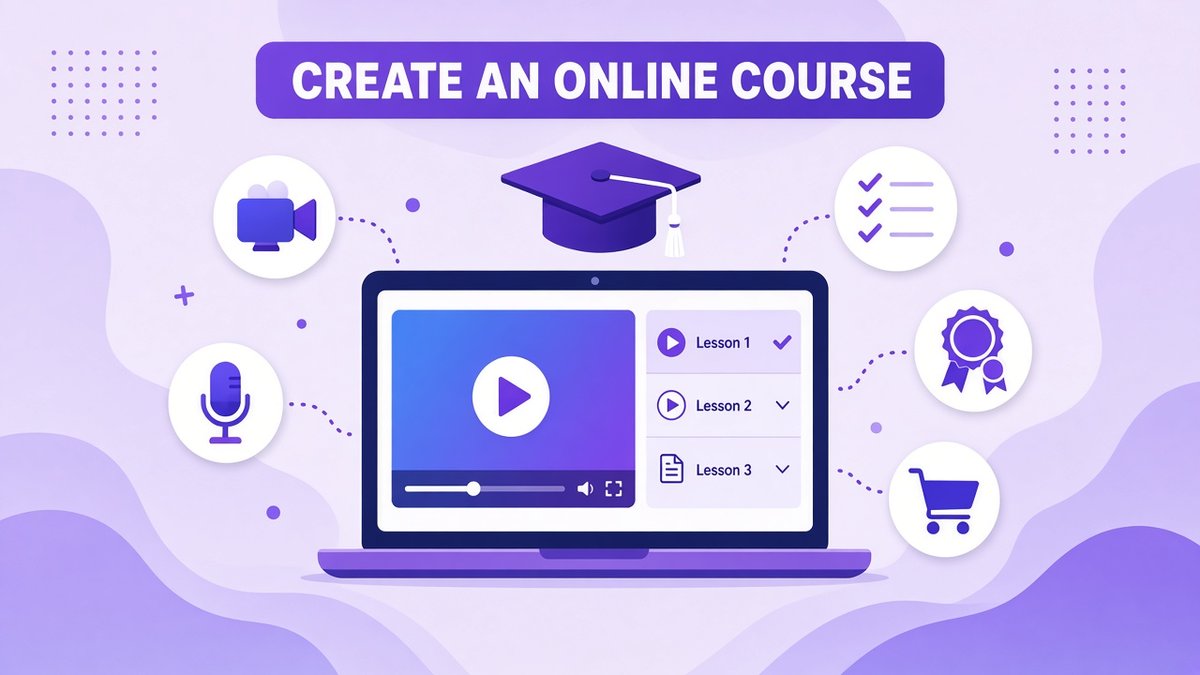
If you know how to do something that other people struggle with, learning how to create an online course can turn that knowledge into a product you build once and sell many times. Freelancers, coaches, consultants and small business owners across the US, UK and Europe use courses to earn beyond their working hours and to reach clients they could never serve one to one. In this guide, I explain how to create an online course step by step, from validating your idea and planning modules to recording lessons, choosing a platform, setting a price and running your first launch.
✔ Key takeaways
- Validate demand before you record anything: pre-sell or survey your audience first.
- Build the course around one clear transformation, not everything you know.
- Short, focused lessons of 5 to 15 minutes are easier to finish and easier to make.
- A phone or webcam, a decent microphone and good light are enough to start.
- Price on the value of the result, then test; do not undercharge to feel safe.
- Sell through an email list and a simple funnel, not just a sales page on its own.
📋 In this guide
Is an online course worth creating?
An online course is a structured set of lessons, usually video, text, worksheets or a mix, that takes a student from a starting point to a specific result. Done well, it is one of the most scalable products a small business can sell. You do the work once and then improve it over time.
It is not passive income from day one, though. A course needs a validated idea, real teaching effort and ongoing marketing. The good news is that the tools have become cheap or free, so the main investment is your time.
| Course type | Typical length | Best for |
|---|---|---|
| Mini course | 1 to 2 hours | Lead magnets, low-price entry products |
| Signature course | 4 to 10 hours | Your main paid product with a clear result |
| Cohort course | 4 to 8 weeks, live sessions | Higher prices, accountability and community |
| Workshop | A single 60 to 180 minute session | Testing a topic quickly |
Choose and validate your course idea
The biggest risk is spending months on a course nobody buys. Choose a topic where three things overlap: you have real experience, people already ask you about it, and they are willing to pay to solve it.
List the problems you solve
Write down the questions clients, colleagues or followers ask you most. Each one is a possible course topic.
Define the transformation
Finish this sentence: “After this course, students will be able to…” Make it concrete, for example “launch a Shopify store in 30 days” or “file their first self-assessment tax return”.
Check demand
Search for existing courses, books and forum threads on the topic. Competition is a good sign; it means people pay for it.
Pre-sell or survey
Offer a pre-sale or a waiting list to your audience before you build. Even a handful of paying founding students proves the idea and funds the work.
💡 Use your email list to validate
If you have even a small list, ask subscribers what they struggle with and whether they would join a course on it. My guide on how to start a newsletter shows how to build that list from scratch.
Plan the course outline
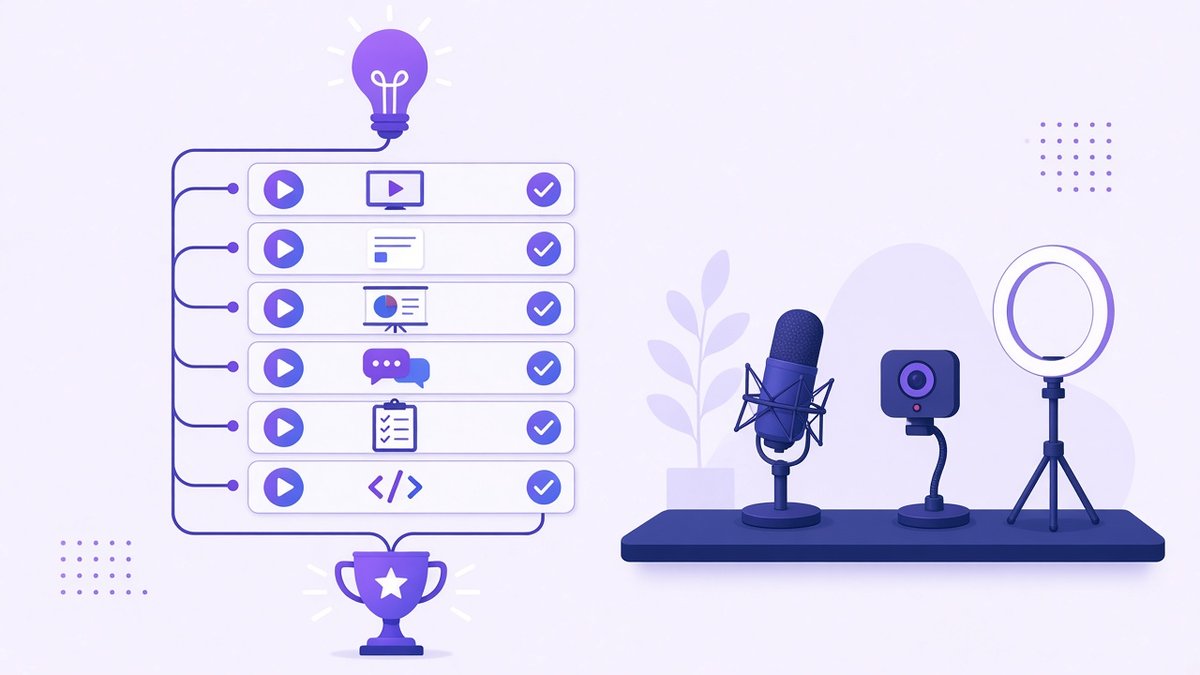
Plan your online course as a path of short modules from the course idea to the student result, recorded with a simple microphone, webcam and ring light setup.
Work backwards from the result. List every step a student must take to get there, then group the steps into 4 to 8 modules. Each module should end with a small win the student can see.
| Module | Purpose | Example lesson |
|---|---|---|
| 1. Start here | Welcome, expectations, quick first win | How to get the most from this course |
| 2 to 5. Core skills | The main steps in order | One lesson per step, with a worksheet |
| 6. Putting it together | Apply everything to a real project | Walkthrough of a complete example |
| 7. Next steps | What to do after the course | Resources, community, next offer |
Cut anything that does not move the student towards the result. A shorter course that people finish is worth more than a long one they abandon, and finished students give better reviews and referrals.
Create the course content
You do not need a studio. Most successful course creators start with simple equipment and improve it later:
- Video: a modern smartphone or a 1080p webcam.
- Audio: a USB or clip-on microphone. Viewers forgive average video but not bad sound.
- Light: a window in front of you or an inexpensive ring light.
- Screen recording: free tools such as OBS Studio or the built-in recorders on Mac and Windows.
- Slides and worksheets: Google Slides, Canva or PowerPoint, exported as PDFs.
📌 Batch your recording
Write a short outline for each lesson, not a full script, then record a whole module in one session. Keep lessons to 5 to 15 minutes and re-record only when something is genuinely wrong.
Choose a course platform
Your course platform hosts the lessons, handles payments and gives students a login area. There are three main options:
| Option | Pros | Cons |
|---|---|---|
| All-in-one platform (Systeme.io) | Course, sales funnel, email and payments in one place; free plan available | Less design freedom than a custom site |
| Dedicated course platform (Teachable, Thinkific, Kajabi) | Rich course features and student tools | Can get expensive; email and funnels may need extra tools |
| Marketplace (Udemy, Skillshare) | Built-in audience | Low prices, you do not own the customer relationship |
For a first course, I recommend starting with Systeme.io. Its free plan includes one course, a sales funnel and email marketing with unlimited sends, so you can launch without paying for software. Paid plans raise the course limit, for example to 5 courses on Startup, as I explain in my Systeme.io pricing breakdown. If you want more advanced funnels, compare it in Systeme.io vs ClickFunnels.
Price your online course
Price on the value of the result, not the number of hours of video. A course that helps a freelancer win one extra client is worth far more than one that teaches a hobby. Look at what similar courses charge, then position yours based on how specific and supported it is.
- Low price (under $50 or €50): mini courses and entry offers.
- Mid price ($100 to $500): signature self-paced courses with a clear result.
- Premium ($500 and up): cohort courses with live calls, feedback or community.
These are broad ranges, not rules. Test a founding price with your first students, then raise it as you add testimonials. My guide on how to price your product or service covers value-based pricing in more depth.
Launch and sell your course
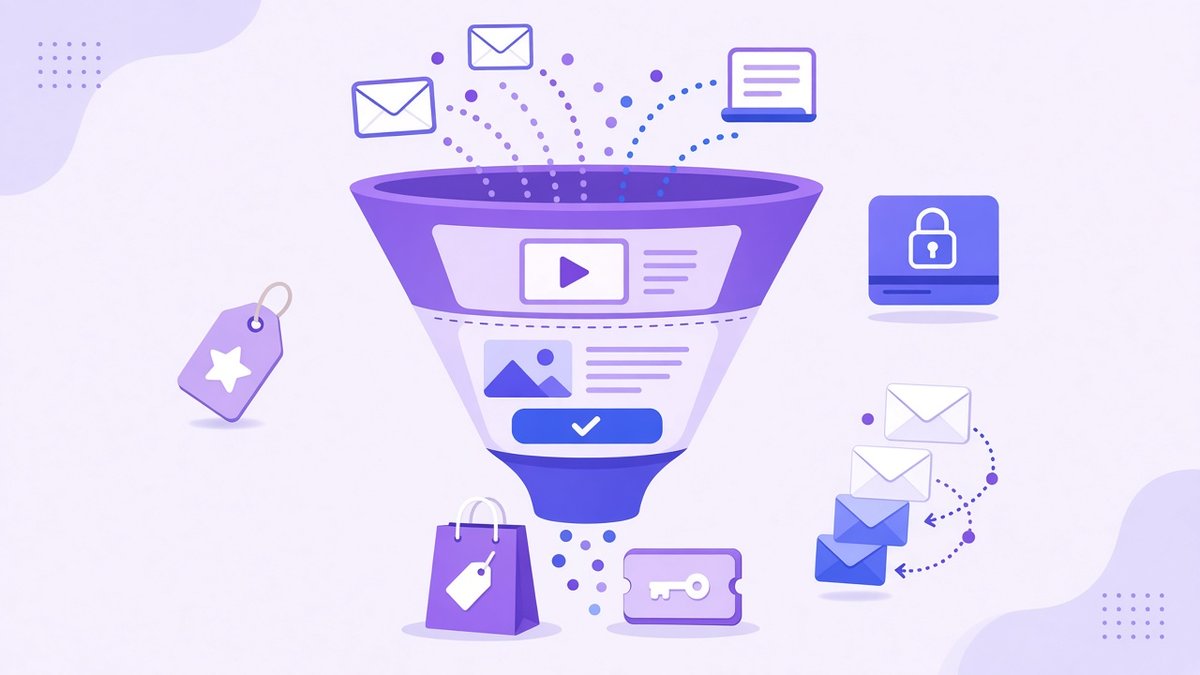
A simple online course sales funnel: a free mini lesson and emails bring people in, a sales page converts them, and secure payment delivers course access.
Most course sales come from people who already know and trust you. A simple launch funnel looks like this:
Offer a free lead magnet
Give away a checklist, mini lesson or workshop related to the course. My guide on how to create a lead magnet walks through it.
Send a short email sequence
Over 5 to 7 days, teach something useful, share a student story and answer common objections.
Open the cart with a deadline
Send people to your sales page with a founding price or bonus that ends on a clear date.
Follow up and learn
Email again before the deadline, then survey buyers and non-buyers to improve the next launch.
Once the first launch works, you can turn it into an evergreen funnel that runs all year. See my comparison of free funnel builders for the tools.
VAT, GDPR and refunds
Selling digital products internationally comes with a few rules worth knowing:
- VAT on digital services: EU and UK rules generally require VAT based on the buyer’s country for digital sales to consumers. Some platforms collect and pay this for you, so check before you choose.
- US sales tax: some US states tax digital products; again, your platform or payment processor may handle it.
- GDPR: collect clear consent for marketing emails and explain how you use student data.
- Refund policy: publish a clear policy. EU consumers have a 14-day withdrawal right for digital content unless they agree to immediate access and acknowledge losing that right.
- Copyright: use only images, music and materials you have the rights to.
⚠️ Not legal or tax advice
Rules vary by country and change over time. Check with an accountant or your local tax authority before you start selling at scale.
Common course creation mistakes
- Building before validating: months of work for a course nobody asked for.
- Teaching everything you know: students want a result, not an encyclopedia.
- Over-investing in equipment: clear audio and good teaching matter more than a fancy camera.
- No email list: launching to nobody is the most common reason courses fail.
- Underpricing: very low prices can signal low value and attract less committed students.
- Ignoring student feedback: your first students show you exactly how to improve the course.
Frequently Asked Questions
How do I create an online course for free?
Validate your idea with your audience, outline 4 to 8 modules, record short lessons with your phone or webcam and free screen recording tools, then host and sell the course on a platform with a free plan, such as Systeme.io, which included one course on its free plan when I checked.
How long does it take to create an online course?
A focused mini course can take a week or two. A full signature course usually takes four to eight weeks of part-time work, including outlining, recording and setting up the sales page.
How long should an online course be?
As long as it takes to deliver the promised result and no longer. Many successful self-paced courses are 2 to 6 hours, split into lessons of 5 to 15 minutes.
How much should I charge for my online course?
Price on the value of the result. Mini courses often sell for under $50, signature courses for $100 to $500 and cohort courses with live support for more. Test a founding price and raise it as you collect testimonials.
Do I need a big audience to sell a course?
No, but you need some audience. Even a small email list of engaged readers can fill a first cohort. Build the list with a free lead magnet before you launch.
Do I have to charge VAT on an online course?
If you sell to consumers in the EU or UK, VAT rules for digital services usually apply based on the buyer’s location. Some course platforms handle this for you. Check with an accountant for your situation.
Final thoughts
Now you know how to create an online course: validate the idea, build around one clear result, keep lessons short, choose a simple platform, price on value and sell through an email list and funnel. Your first version will not be perfect, and it does not need to be. Launch it, listen to your students and improve it with each round.
Pick your course topic this week, write the one-sentence transformation and ask ten people in your audience whether they would buy it.
Launch your first course on Systeme.io for free
Host your course, build the sales funnel and send launch emails from one tool, with a free plan that never expires.
Affiliate link. I may earn a commission at no extra cost to you.
Affiliate disclosure: some links in this post are affiliate links, so I may earn a commission at no extra cost to you. I only recommend tools I’d use myself.