If you want to know how to start an online business, the hardest part is usually not the technology. It is choosing one idea, proving people will pay for it and showing up consistently while it grows. I have built and tested several online projects, and the ones that worked all followed the same simple path: a clear problem, a simple offer, a basic page to sell it and a steady way to reach the right people. This guide walks you through the main online business models, a 9-step launch plan and the tools you actually need.
✔ Key takeaways
⏱ About 9 min read · the short version is right here
- The easiest ways to start an online business are services, digital products, content with affiliate or ad income, online courses and small e-commerce.
- Validate demand before you build: get a few people to say yes, or better, pay, for a simple version of your offer.
- Start with one clear offer, one landing page and one way to reach customers. Add more only when that works.
- You can launch with almost no money using a free all-in-one platform for your site, email and checkout.
- Treat it as a business from day one: simple bookkeeping, clear pricing and a weekly routine.
7 ways to start an online business
Before you pick a name or build a website, pick a business model. Each one has a different speed, cost and effort level.
1. Freelance or online services
Sell a skill you already have, such as writing, design, video editing, development, bookkeeping, virtual assistance, coaching or consulting. It is the fastest route to income because you need no product, only clients. If you plan to grow it into a business rather than a job, read my take on solopreneur vs freelancer.
2. Digital products
Templates, e-books, checklists, spreadsheets, presets, printables and stock assets can be sold again and again without extra production cost. They work best once you know a specific audience and the problems they will pay to solve.
3. Online courses and memberships
If you can teach a skill that gets people a result, a course or paid community can scale your knowledge. Start small: a live cohort or a short mini-course lets you test demand and improve the content before you record a full programme.
4. Content business: blog, YouTube, podcast or newsletter
Create useful content for a niche and earn through affiliate links, sponsorships, ads or your own products. It is slow to start but builds an asset that can earn for years. An email newsletter is one of the most reliable foundations, and my guide on how to start a newsletter shows how to launch one.
5. Affiliate marketing
Recommend products you trust and earn a commission on sales. It needs an audience first, so it usually sits on top of a content business rather than replacing it. Always disclose affiliate links clearly.
6. E-commerce and print-on-demand
Sell physical products through your own store or marketplaces. Print-on-demand and dropshipping reduce upfront stock costs but have thinner margins and more competition. Holding your own stock gives more control but needs more cash.
7. Software, apps and tools
Small software tools, plugins or no-code apps can be very profitable, but they take the longest to build and support. They suit people with technical skills or a clear niche problem they understand deeply.
| Model | Startup cost | Time to first income | Skill needed | Scalability |
|---|---|---|---|---|
| Freelance services | Very low | Weeks | Existing skill | Limited by your hours |
| Digital products | Low | 1–3 months | Niche knowledge | High |
| Courses and memberships | Low to medium | 1–3 months (pre-sell) | Teaching ability | High |
| Content business | Low | 6–18 months | Consistency, writing or video | High |
| Affiliate marketing | Low | 6–12 months | Audience building | Medium to high |
| E-commerce | Medium to high | 1–3 months | Product, operations | Medium |
| Software and apps | Medium to high | 6+ months | Technical or no-code | Very high |
How to start an online business in 9 steps
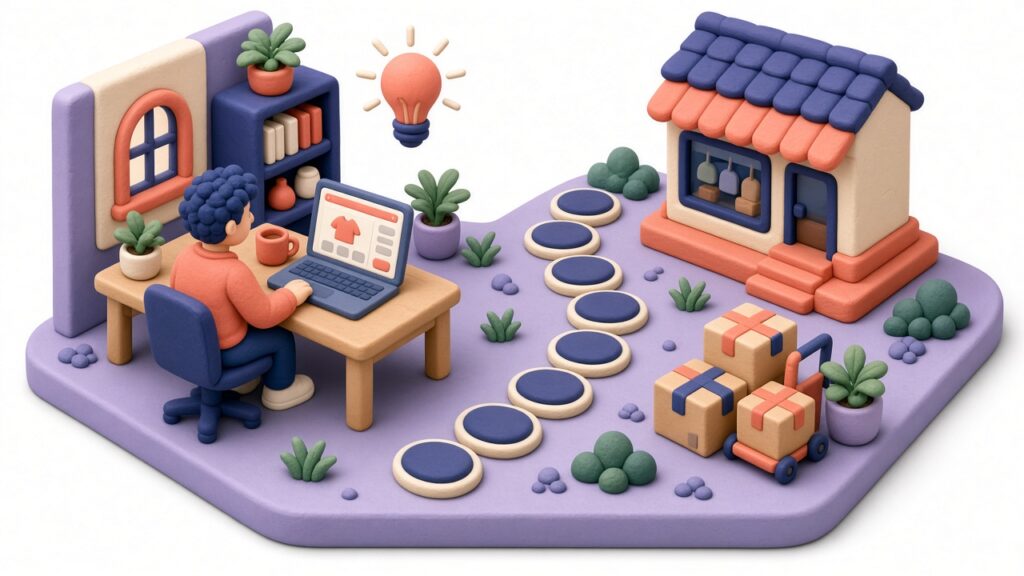
Once you have a model in mind, follow these steps in order. Skipping validation is the most common reason new online businesses fail.
Choose a problem, not just an idea
Write down problems you understand well from your work, hobbies or life experience. Good online businesses solve a specific, painful problem for a specific group of people, for example “helping physiotherapists get more bookings online” rather than “marketing for everyone”.
Research your audience and competitors
Look at forums, social media groups, reviews and search results. What do people complain about? What are they already paying for? Competition is a good sign: it proves demand. Your job is to find an angle, audience or level of service the others miss.
Validate before you build
Describe your offer in a short post, message or simple page and ask for a commitment: a booked call, a waitlist sign-up or, best of all, a pre-order. If ten of the right people say yes, you have something. If nobody responds, adjust the offer or audience before you spend more time.
Create a clear, simple offer
Define exactly what the customer gets, the result it delivers, the price and what makes it better than alternatives. Start with one offer. My guide on how to price your product or service helps you set a price that covers your time and reflects the value.
Build one landing page
You do not need a big website to launch. One page with a clear headline, the problem, your offer, proof, price and a single call to action is enough. My guide on how to create a landing page shows the structure that converts.
Set up payments and email
Connect a way to take payments and start collecting email addresses from day one, so every visitor who is not ready to buy can still hear from you.
Get your first ten customers manually
Reach out personally to your network, join communities where your audience gathers, offer a few early-bird spots and ask for feedback. Manual effort teaches you exactly what customers care about.
Build a simple marketing engine
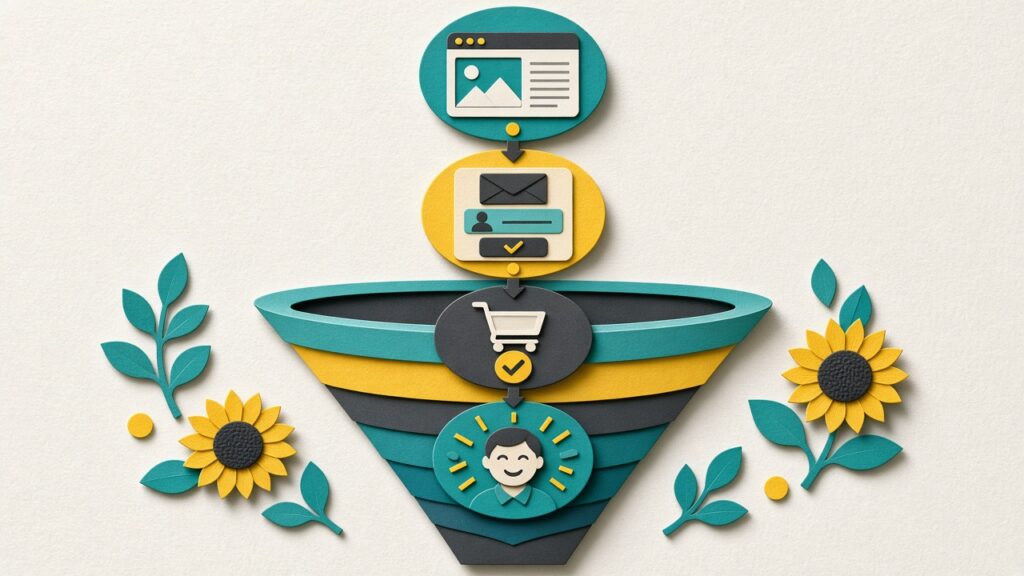
Once you have a few sales, choose one main channel: SEO and content, social media, email, partnerships or paid ads. Connect it to a simple funnel, such as a free lead magnet, a welcome email sequence and an offer. My guide on how to build a sales funnel explains each stage.
Run it like a business
Track income and expenses from the start, set aside money for tax, check local registration rules and protect your time with a weekly routine for delivery, marketing and admin.
⚠️ Avoid this trap
Many beginners spend months perfecting a logo, website and social profiles before talking to a single customer. Validate first. A plain page that sells beats a beautiful one nobody visits.
Tools you need to launch (most have free plans)
When you are starting out, the goal is a lean setup that does not drain your budget. Here is a simple stack:
- All-in-one platform: Systeme.io combines a website, landing pages, sales funnels, email marketing, courses and checkout in one account. Its free plan includes up to 2,000 contacts, 3 sales funnels, 1 course and unlimited email sends, and paid plans start at $17 a month (checked on its pricing page on 10 Nov 2026). For a full breakdown, see my Systeme.io review.
- Dedicated email tool: if your business is built around a newsletter or content, Kit has a free plan for up to 10,000 subscribers and is built for creators.
- Domain name: buy one from a reputable registrar and use it for a professional email address.
- Design: Canva for graphics, simple product mock-ups and social posts.
- Payments: Stripe, PayPal or a local payment gateway, connected to your checkout page.
- Bookkeeping: a simple spreadsheet is fine at first, then accounting software once you have regular income.
Launch your first offer for free
Build a landing page, collect emails and take payments in one place with the Systeme.io free plan. No credit card needed.
Start free with Systeme.io →Affiliate link. I may earn a commission at no extra cost to you.
Common mistakes when starting an online business
- Chasing trends instead of problems. A hot niche is useless if you do not understand the customer.
- Building too much before selling. Launch a simple version and improve it with real feedback.
- Targeting everyone. A narrow audience is easier to reach and easier to sell to.
- Ignoring email. Social followers are rented; an email list is yours.
- Underpricing. Very low prices attract difficult customers and leave no money for growth.
- Quitting too soon. Most online businesses need months of steady effort before they take off.
Your first 30 days
- Days 1–7: choose your model and problem, research ten competitors and list your audience’s top questions.
- Days 8–14: write your offer, build a one-page site and set up email and payments.
- Days 15–21: contact 30 people who match your audience and ask for feedback or a pre-order.
- Days 22–30: deliver to your first customers, collect testimonials and choose one marketing channel to focus on next month.
Frequently Asked Questions
What is the easiest online business to start?
For most beginners, selling a service you already know, such as writing, design, bookkeeping, tutoring or consulting, is the easiest. You need no inventory, you can start with your existing skills and you get paid from the first client. Digital products and courses come next, once you understand what your audience wants.
How much money do I need to start an online business?
Many online businesses can start with very little money. A domain name costs a small yearly fee, and free plans of tools such as Systeme.io or Kit cover a basic website, landing pages and email. Budget a little extra for a professional email address, design help or small test ads once you have validated demand.
How long does it take for an online business to make money?
A service business can earn within weeks if you reach out to potential clients directly. Content, SEO, affiliate and ad-based businesses usually take six to eighteen months to build meaningful income. Your speed depends on how quickly you validate an offer and how consistently you market it.
Do I need a website to start an online business?
You need at least one page you control where people can learn what you offer and take action, such as booking a call, joining your email list or buying. A simple landing page is enough to start. Marketplaces and social media help with reach, but your own page and list protect you from platform changes.
Can I start an online business while working a full-time job?
Yes. Many people start in the evenings and at weekends. Choose a model that fits limited hours, such as freelance projects, a digital product or a newsletter, and check your employment contract for any rules about side work or conflicts of interest.
Do I need to register my online business?
Rules depend on your country and how much you earn. In many places you can start as a sole trader or freelancer and register for tax once you pass a certain income level. Check your local government or tax authority website, and speak to an accountant when you start earning regularly.
Final thoughts
Starting an online business is easier and cheaper than ever, but success still depends on the basics: solve a real problem for a specific audience, validate before you build, keep your first offer simple and market it consistently. Pick one model from this guide, follow the nine steps and aim for your first ten customers. Everything else can be improved later.
Affiliate disclosure: the Systeme.io and Kit links above are affiliate links, so I may earn a commission at no extra cost to you. I only recommend tools I would use myself.