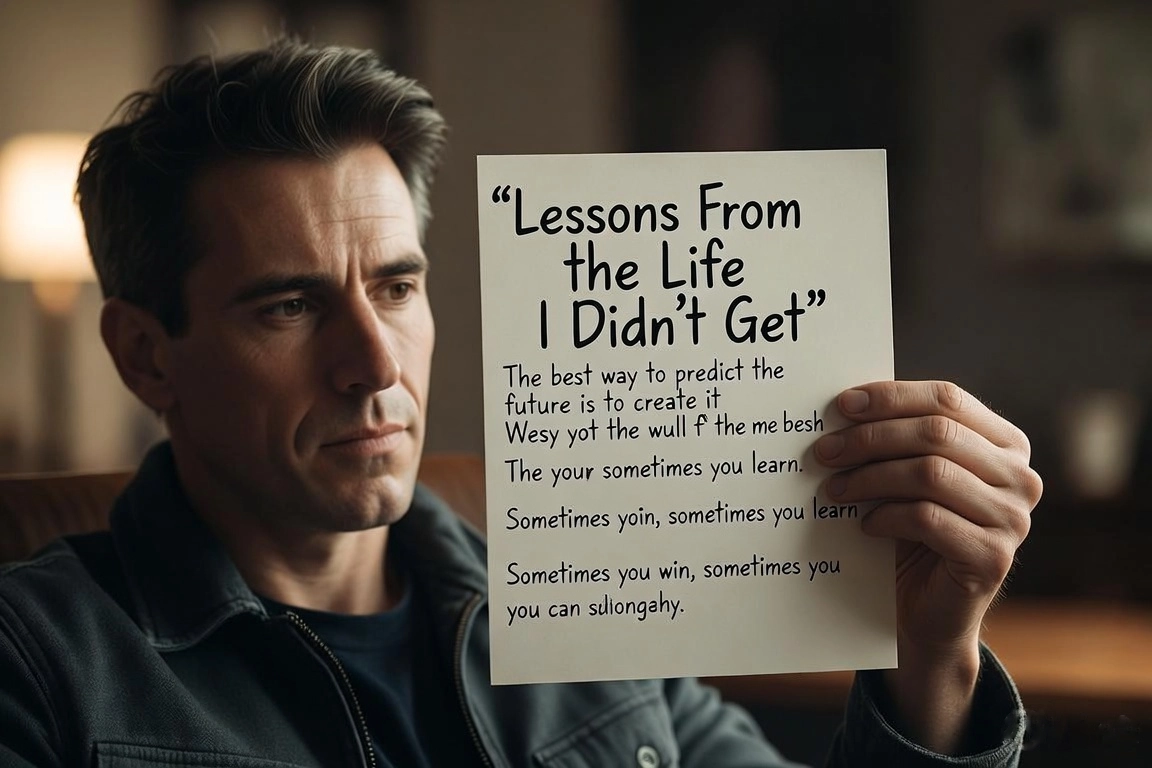
Explore powerful personal lessons from the life not lived—regrets, unlived dreams, and how reflection turns disappointment into wisdom, gratitude, and a more authentic present. Heartfelt guide to embracing your actual journey.
Life rarely unfolds exactly as we script it. We chase dreams, make plans, and imagine a future that feels destined—only to watch doors close, paths diverge, and versions of ourselves fade into what-ifs. For years, I carried the weight of the life I didn’t get: the career that slipped away, the relationships that never bloomed, the adventures I postponed “until later.” But through quiet reflection, those unrealized futures became some of my greatest teachers. This is a personal reflection on the lessons born from disappointment, regret, and the gentle art of letting go. If you’ve ever mourned a road not taken, these insights may resonate.
The life I didn’t get wasn’t a failure—it was a map of my evolving desires, fears, and blind spots. By examining it honestly, I’ve found freedom in the life I did receive. Here are the profound lessons that emerged from years of introspection, heartbreak, and growth.
Lesson 1: The Myth of the Perfect Path
I once believed there was one “right” life—a linear trajectory of success, stability, and fulfillment. In my twenties, I turned down opportunities that didn’t fit that vision, convinced something better was coming. A corporate job offer in a city I didn’t love? Declined. A creative pursuit that felt too risky? Shelved. Years later, I realized those choices weren’t detours; they were data points.
The life I didn’t get taught me that certainty is an illusion. Paths that look perfect from afar often hide unseen struggles. Friends who followed the “ideal” route—prestigious degrees, high-paying roles—shared stories of quiet burnout and identity crises. Meanwhile, the messy, unplanned chapters of my actual life forced adaptability, creativity, and resilience I never would have developed on a smoother road.
Reflection Exercise: Write a letter to your younger self about a major “what if.” What assumptions did you hold? How have they changed? This practice dissolves regret and reveals how the “wrong” choices shaped your strengths.
Lesson 2: Unlived Dreams Reveal True Desires
One of the biggest unlived chapters was my dream of becoming a full-time writer traveling the world. I imagined books published, passports filled with stamps, and a bohemian freedom that seemed romantic. Instead, responsibilities—family, stability, and practical concerns—kept me grounded in a more conventional routine.
At first, this stung. But examining that unlived life closely showed me the desire wasn’t truly about constant travel or fame. It was about freedom of expression, curiosity, and connection. I now weave writing into my daily life in smaller, sustainable ways—journaling, blogging, and sharing stories that matter. The dream didn’t die; it transformed into something authentic and nourishing.
This lesson repeats across domains. The relationship I didn’t get taught me what I truly value in partnership—not perfection, but presence and growth. The business idea that never launched highlighted my love for problem-solving without the pressure of entrepreneurship. Unlived dreams act as mirrors, reflecting core values we can honor in our current reality.
Lesson 3: Regret Is a Teacher, Not an Anchor
Regret used to haunt me at night—the promotion I didn’t pursue aggressively enough, the trip canceled due to fear, the words left unsaid in important conversations. I carried these like invisible scars. A well-examined life, however, reframes regret as diagnostic information rather than punishment.
Looking back, many regrets stemmed from fear of failure or judgment. One major turning point came during a period of burnout when I finally asked: What would I do differently if fear wasn’t in control? This question unlocked small experiments—saying yes to new experiences, setting boundaries, and prioritizing joy over approval. The life I didn’t get because of hesitation showed me the cost of playing small, motivating me to take calculated risks today.
Philosopher Søren Kierkegaard noted that life can only be understood backwards but must be lived forwards. Reflection allows us to extract wisdom without remaining stuck in the past.
Lesson 4: Gratitude for the Life That Is
Comparing reality to fantasy breeds discontent. The life I didn’t get featured flawless health, endless energy, and uninterrupted success. My actual life includes challenges—health setbacks, financial ups and downs, and ordinary days that feel mundane. Yet these very imperfections have cultivated depth, empathy, and appreciation.
I now practice “gratitude for the detour.” The career pivot I was forced into introduced me to meaningful work and people I wouldn’t have met otherwise. The relationships that ended painfully taught emotional intelligence and self-worth. Even losses—missed opportunities, closed doors—created space for unexpected blessings.
- Stronger family bonds forged in shared struggles
- Resilience built through navigating uncertainty
- Deeper self-knowledge from questioning old dreams
- Present-moment awareness that the “perfect” life would have delayed
Research on counterfactual thinking (imagining alternate realities) shows that while it can cause short-term sadness, reflective use fosters greater life satisfaction. I’ve experienced this firsthand.
Lesson 5: Letting Go Creates Space for New Growth
Clinging to the vision of the life I didn’t get kept me emotionally tethered to the past. Releasing it felt like mourning. But mourning is necessary. Through therapy, journaling, and honest conversations, I practiced acceptance—not as defeat, but as liberation.
Letting go revealed hidden possibilities. I discovered joy in mentoring others, building a home life rich in simple pleasures, and pursuing passions as hobbies rather than high-stakes obligations. The energy once spent on longing now fuels creativity and presence.
A powerful ritual: Create a “Farewell to the Unlived Life” list. Acknowledge each lost dream, thank it for its lessons, and consciously release it. This symbolic act frees mental space for the life unfolding now.
Lesson 6: Identity Is Fluid, Not Fixed
The life I didn’t get came with a rigid self-image: the ambitious go-getter, the eternal optimist, the person who would “have it all.” Reality humbled that ego. Health challenges, professional shifts, and personal losses forced me to redefine success and worth.
Today, I see identity as a garden—some plants thrive, others wither, and new ones emerge. This fluidity brings relief. I no longer need to perform for an imagined future self. Authenticity in the present moment matters more than any scripted biography.
Real Reflections From Others
My journey echoes many. A friend who dreamed of academia but built a successful small business found deeper purpose in community impact. Another who mourned a missed marriage later celebrated profound self-love and chosen family. These stories remind us we’re not alone in navigating alternate realities.
Practical Steps for Examining the Life You Didn’t Get
1. **Journal Prompt Series**: Dedicate time weekly to questions like “What did I expect by now?” and “What am I grateful for instead?”
2. **Timeline Exercise**: Map key decision points and alternate branches. Note skills or insights gained from the actual path.
3. **Talk It Out**: Share with a trusted friend or therapist. External perspective often reveals silver linings.
4. **Future Self Letter**: Write from the perspective of your current self to the imagined “perfect life” version. Highlight unexpected gifts in reality.
5. **Micro-Experiments**: Incorporate elements of unlived dreams into daily life—short trips, creative projects, new connections.
Conclusion: Embracing the Life That Chose You
The life I didn’t get will always linger as a gentle ghost—reminding me of youthful hopes and the beauty of possibility. But it no longer haunts me. Instead, it illuminates the richness of the life I have: imperfect, surprising, and deeply meaningful.
If you’re grappling with roads not taken, remember this: Every ending is a beginning in disguise. By examining the unlived with compassion and curiosity, we extract wisdom that propels us forward. The most beautiful life isn’t the one we planned—it’s the one we learn to love while living it fully, here and now.
What lessons has the life you didn’t get taught you? I’d love to hear in the comments. Your story may become someone else’s breakthrough.
This is a personal reflective essay. Experiences vary; consider professional support for deep emotional processing.